

 EN
EN

MRD Strategy Following the FDA’s Breakthrough
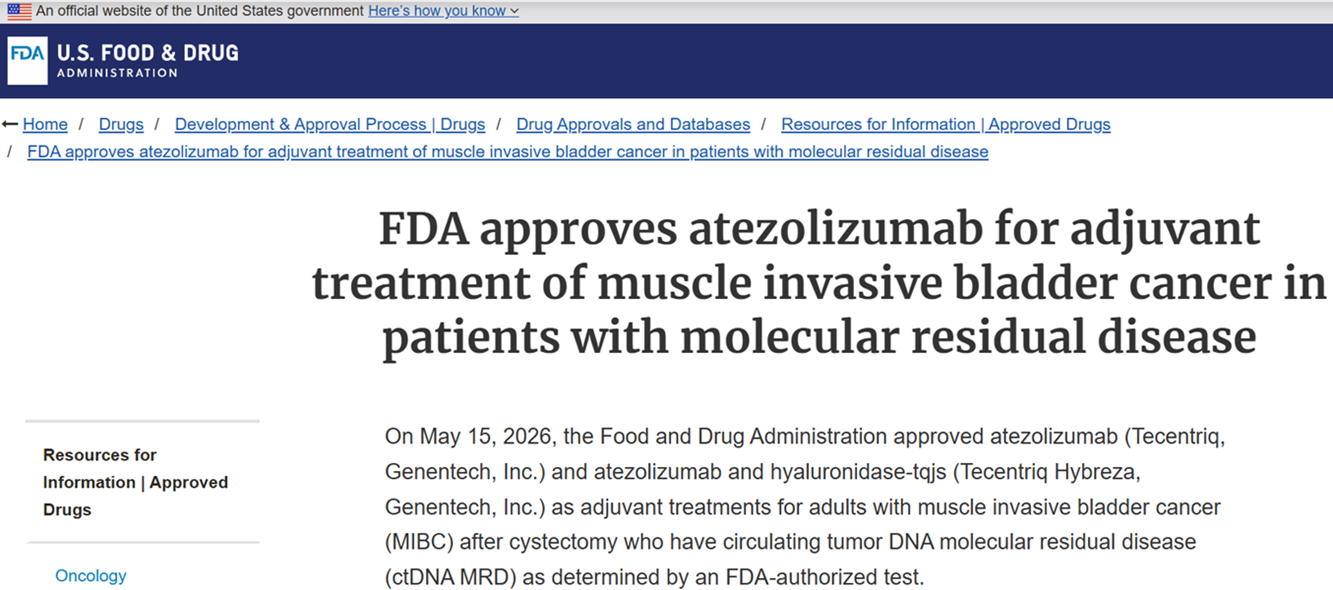
On the same day, the FDA approved Signatera CDx (Natera Company) as a companion diagnostic device for screening MIBC patients with ctDNA MRD after cystectomy for adjuvant treatment with Tecentriq or Tecentriq Hybreza. The MRD detection technology based on individual patient customization has been officially approved by the U.S. FDA and is officially eligible for clinical concomitant diagnostic application in the identification of ctDNA MRD - positive patients [2].
SpaceGen Detection Strategy
SpaceGen has independently developed molecular residual lesion (MRD) detection products for solid tumors. The detection strategies can be classified into two categories: customized panel and fixed panel. The customized panel strategy involves conducting a comprehensive and in - depth whole - exon sequencing of the patient's primary tumor tissue initially to identify its unique gene mutations. Subsequently, based on the results of these specific gene mutations, a personalized panel is customized for the subsequent ctDNA detection of a specific number of mutation sites in the tissue.
The immobilized panel strategy relies on plasma cell - free tumor DNA (ctDNA) for the detection of immobilized panels. This panel is of a larger scale, encompassing a broader range of sites, and employs medium - to - high - depth sequencing technology (50,000X). It is well - suited for the monitoring of drug resistance and acquired drug resistance as well as the evaluation of treatment efficacy. Its detection scope encompasses the coding sequence (CDS) regions or hotspots of 194 genes associated with four types of cancer, namely lung cancer, colorectal cancer, stomach cancer, and liver cancer. These genes include driver genes, genes related to targeted drugs, immune - related genes, and complementary high - frequency mutant non - driver genes. Consequently, the immobilized panel exhibits a wider detection range and higher detection sensitivity.
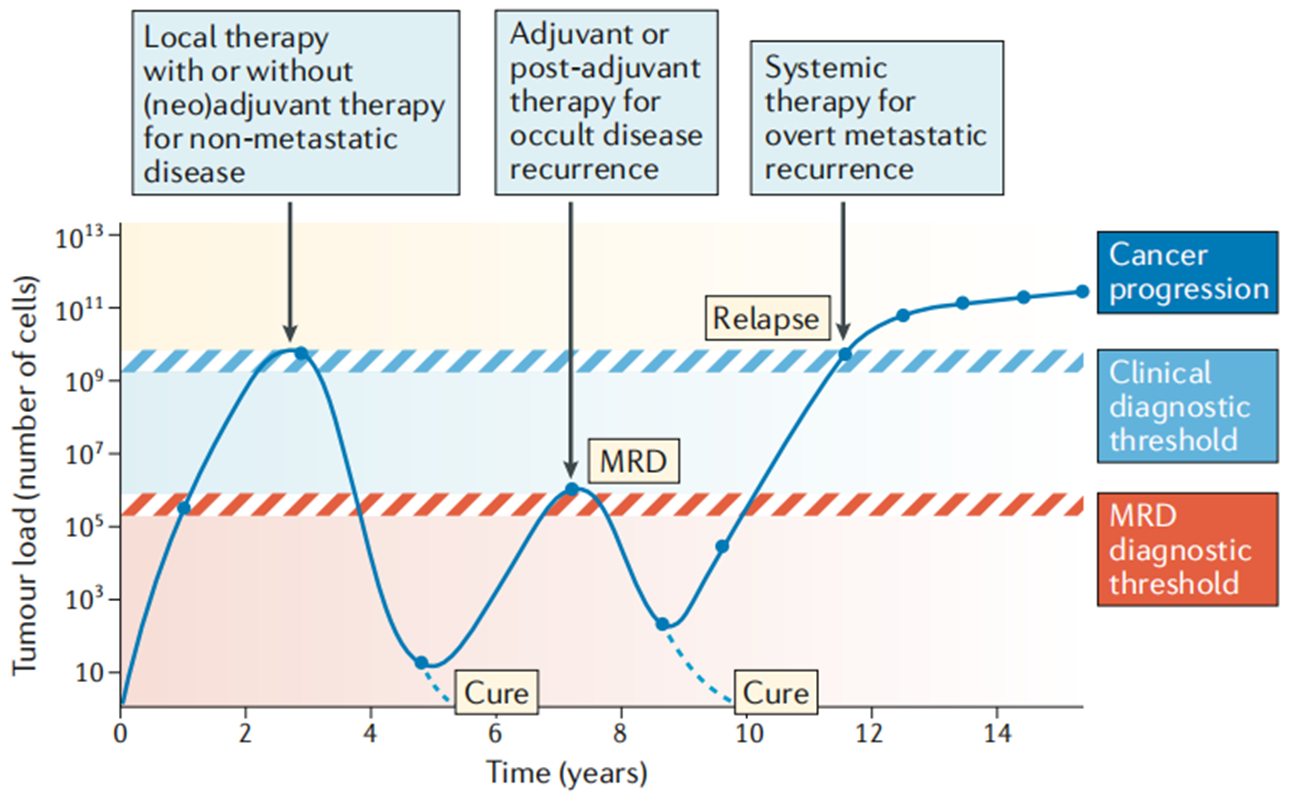
Clinical significance of MRD[3-7]
In clinical applications, the customized panel strategy offers the advantage of a high level of personalization. It can formulate a testing plan tailored to the specific circumstances of each patient, thereby enhancing the accuracy and relevance of the test. The immobilized panel strategy demonstrates remarkable performance in rapid screening and extensive monitoring, making it particularly suitable for large - scale clinical trials and early cancer screening. SpaceGen's MRD testing products can not only furnish clinicians with precise tumor monitoring data but also assist researchers in attaining an in - depth comprehension of the molecular mechanisms of tumors, offering robust support for precision medicine and personalized cancer treatment.
references
References
1. https://www.fda.gov/drugs/resources-information-approved-drugs/fda-approves-atezolizumab-adjuvant-treatment-muscle-invasive-bladder-cancer-patients-molecular
2. https://www.natera.com/company/news/signatera-cdx-approved-by-the-fda-as-a-companion-diagnostic-in-muscle-invasive-bladder-cancer-mibc
3. Annu. Rev. Pathol. Mech. Dis. 2013. 8:277–302;
4. Michael W. Nature Reviews Clinical Oncology (2015)
5. Wan.et al. Nature Reviews Cancer, 2017
6. Vessies DCL, et al. Mol Oncol. 2022;16(14):2719-2732.
7. Mattox AK, et al. 2023;13(10):2166-2179.







 闽公网安备35021202000745