

 EN
EN

PTEN Deficiency: Activation of AKT1 and the Dual Therapeutic Landscape of Capivasertib
In the field of precision therapy for breast cancer, the most widely recognized targeted agents are Trastuzumab for HER2-positive breast cancer and Inavolisib for PIK3CA-mutated breast cancer. However, few are aware that the AKT1 gene, a key component in the PAM signaling pathway, serves as an underrecognized therapeutic target. Capivasertib, a highly selective inhibitor of AKT1/2/3 independently developed by AstraZeneca, has received regulatory approval for the treatment of HR+/HER2- advanced breast cancer harboring specific gene mutations. Its clinical application extends beyond this indication, with evidence of efficacy in PTEN-deficient metastatic hormone-sensitive prostate cancer (mHSPC). Approximately 25% of mHSPC cases are PTEN-deficient; PTEN deficiency causes dysregulation of the PI3K/AKT pathway, which is associated with poor prognosis and high propensity for developing resistance to hormone therapy. Capivasertib is the first targeted therapeutic agent approved for the treatment of this patient subgroup.
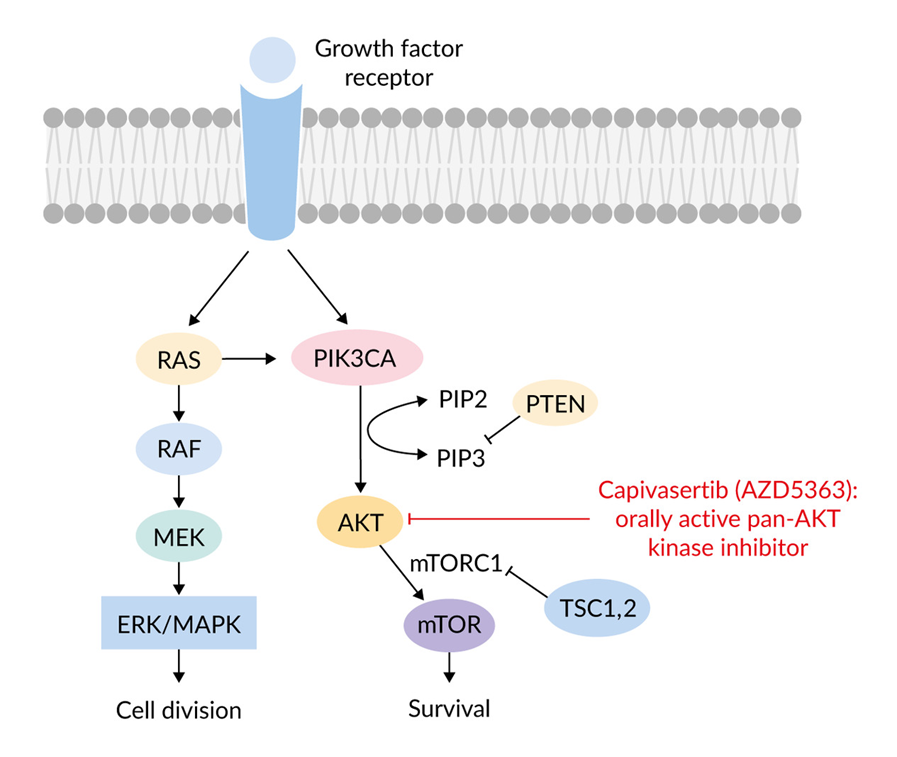
Fig. 1 Pan-AKT inhibitor Capivasertib: Mechanism of action [1]
Here will not elaborate on the currently unclear underlying mechanism herein. Instead, it focuses exclusively on the three core issues of greatest concern to clinical practitioners: defining the condition, identifying appropriate diagnostic approaches, and determining effective treatment strategies.
AKT1: It's not a "death sentence", but a "signpost" for precision treatment.
AKT (protein kinase B) acts as the core node of the PAM pathway, responsible for downstream transmission of signals regulating cell growth and survival.The AKT1 E17K mutation, which accounts for approximately 72% of all activating mutations in the AKT family, induces abnormal binding of the PH domain to PIP1, leading to sustained activation of AKT. This process is functionally equivalent to fixing the cellular "growth throttle" in a continuously depressed state, driving endocrine resistance and disease progression in HR+/HER2- breast cancer [2].
Notably, the AKT1 mutation itself does not exert an influence on patient prognosis. Analysis of a large-scale dataset from the AACR Project GENIE revealed no statistically significant difference in median overall survival (OS) between patients with metastatic breast cancer harboring AKT1 E17K mutations and those with wild-type AKT1 (24.1 months vs 29.9 months, P=0.98) [3]. Therefore, AKT1 mutation is not a prognostic marker, but rather a predictive marker for treament selection.
It is important to highlight population-specific characteristics regarding AKT1 mutation prevalence in breast cancer: the overall mutation rate of AKT1 in breast cancer among Western populations is approximately 3.4%, while among Chinese patients with HR+/HER2- breast cancer, this rate reaches 10.3% [4]. This indicates that approximately 1 in 10 Chinese patients with this subtype of breast cancer are eligible for AKT1 inhibitor-targeted treatment, representing a sizeable beneficiary population.
Detection of AKT1/PTEN alterations → Application of Capivasertib in dual therapeutic settings: breast cancer and prostate cancer
1. Breast Cancer: Capivasertib Plus Fulvestrant (Approved by the FDA and NMPA in 2023, to be included in medical insurance in 2026)
The pivotal Phase III CAPItello-291 study (NCT04305496) enrolled 708 patients with HR+/HER2- advanced breast cancer who had received prior AI therapy [5,6].
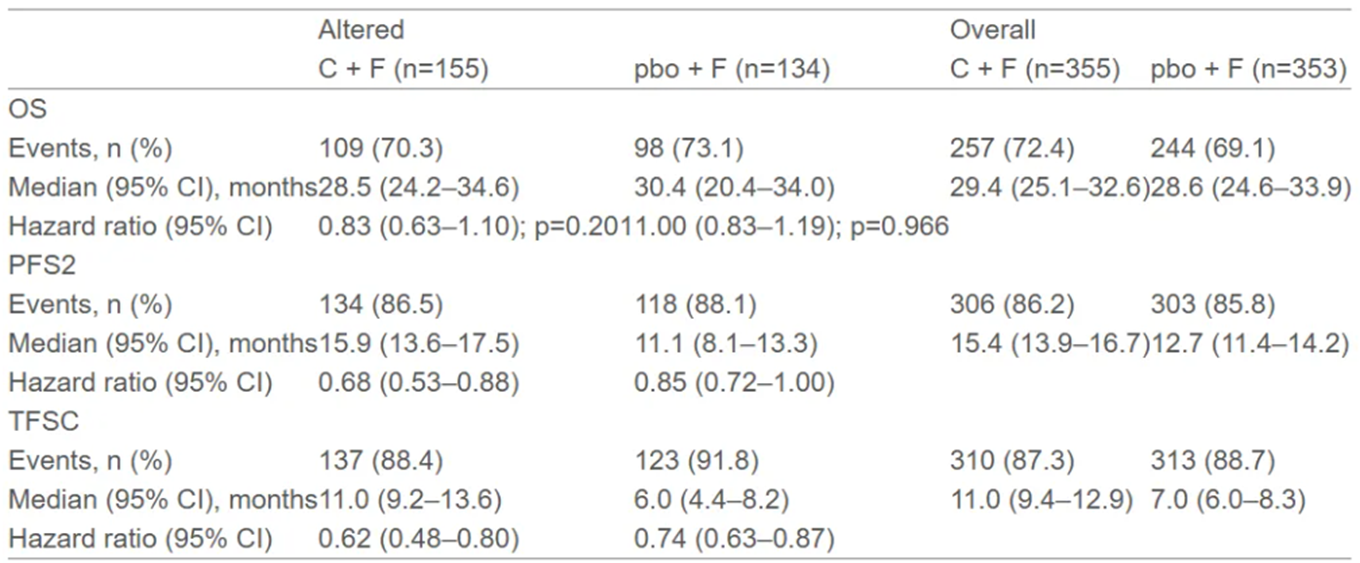
Table 1 Analysis of end-point data
1. For patients with AKT pathway alterations (PIK3CA/AKT1/PTEN): the median progression-free survival (PFS) of the capivasertib plus fulvestrant regimen was 7.3 months, compared with 3.1 months of the placebo plus fulvestrant regimen (hazard ratio HR=0.50, P<0.001). Relative to the placebo plus fulvestrant combination, capivasertib in combination with fulvestrant still delivers clinically significant benefits to patients.
2. For the AKT1 E17K mutation subgroup: the median PFS of the combination treatment group was 9.1 months, compared with 3.7 months of the control group.
3. The 2026 versions of the NCCN, CSCO, and CBCS guidelines all list this regimen as a Grade I recommendation for patients with AKT1/PIK3CA/PTEN alterations who have received prior CDK4/6 inhibitor (CDK4/6i) treatment.
4. Newly Approved Indication for Prostate Cancer: PTEN-deficient metastatic hormone-sensitive prostate cancer (mHSPC), approved by the U.S. Food and Drug Administration (FDA) in June 2026
On 12 June 2026, the U.S. Food and Drug Administration (FDA) approved the combination regimen of capivasertib, abiraterone, prednisone, and androgen deprivation therapy (ADT) for the treatment of metastatic hormone-sensitive prostate cancer (mHSPC) characterized by PTEN defects (defined as deletion in ≥90% of tumor cells detected via immunohistochemistry). For companion diagnostic purposes, the VENTANA PTEN (SP218) RxDx assay is mandated for use in patient screening[7]. This approval was grounded in findings from the Phase III CAPItello-281 trial (ClinicalTrials.gov identifier: NCT04493853), which enrolled a cohort of 1012 patients with newly diagnosed mHSPC presenting PTEN defects[8].
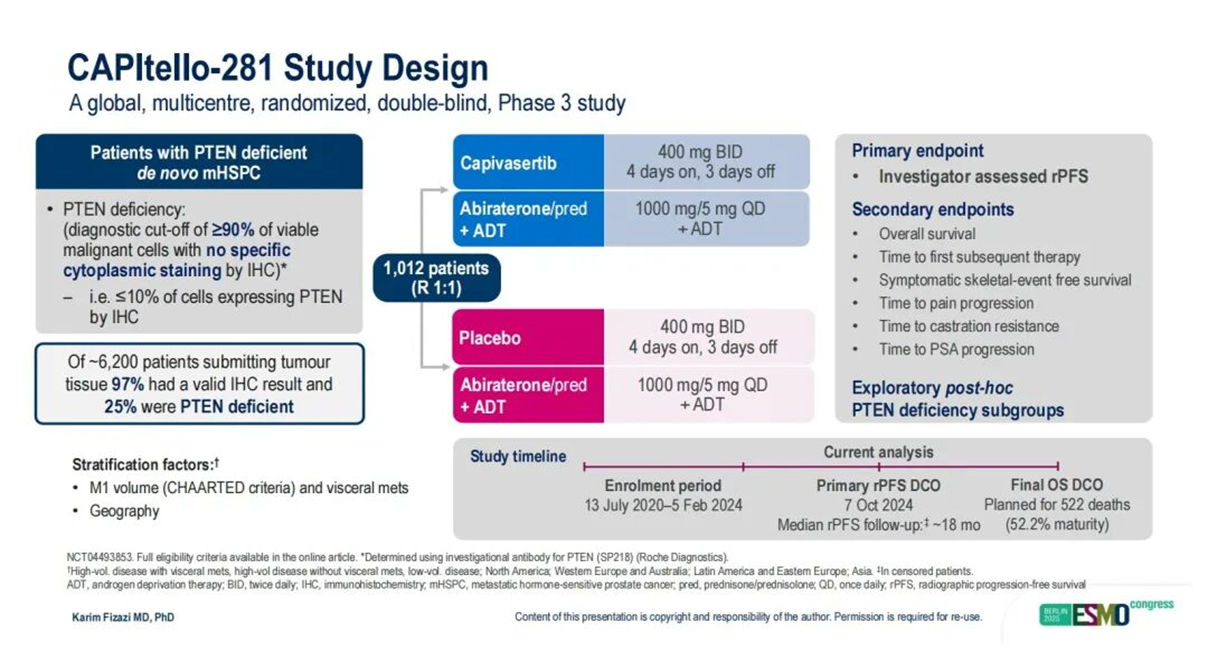
Figure 2 CAPItello-281 ExperimentalDesign
1. This study confirms for the first time that, among patients with PTEN deficiency, combined inhibition of the AKT pathway can address the limited therapeutic efficacy of ARPI monotherapy, providing an accurate therapeutic strategy for this "targeting blind spot".
2. The median radiological progression-free survival (rPFS) in the capivasertib + abiraterone/ADT group was 33.2 months, compared with 25.7 months in the placebo group (HR=0.81, P=0.034).
3. In the subgroup with complete (100%) PTEN deficiency, the hazard ratio (HR) reached 0.68, indicating that the enriched patient population obtained more significant clinical benefits.
1. Clinical implications: PAM pathway abnormalities (including PIK3CA mutation, AKT1 mutation and PTEN deficiency) are actionable therapeutic targets across multiple cancer types. Currently, capivasertib is the only AKT inhibitor that has yielded positive phase III clinical trial results in both hormone receptor-positive (HR+) breast cancer and prostate cancer, and has obtained regulatory approval.
Suitability Criteria: Who is an appropriate candidate and who is not?
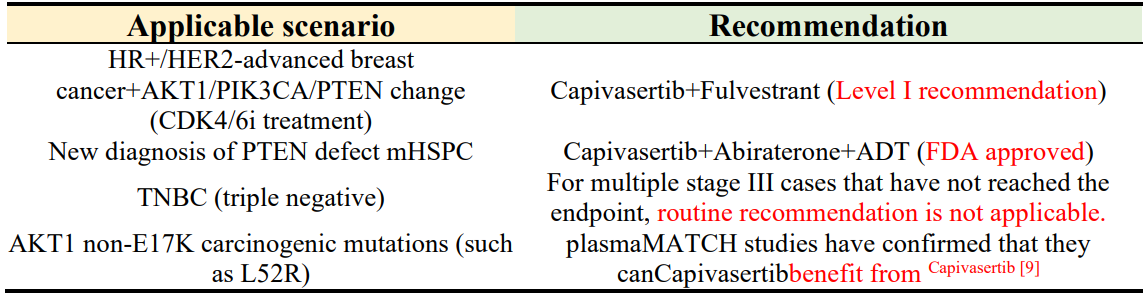
Testing specifications: Tissues are the preferred testing samples, and ctDNA can be used as a supplementary option.
1. Sample
Tumor tissue is prioritized; plasma ctDNA is not available in a timely manner when tissue sampling fails. The concordance rate of AKT1 mutations between primary lesions and metastatic lesions in estrogen receptor-positive (ER+) breast cancer is 99%, and archived paraffin-embedded tissue blocks are available.
2. Method
1. AKT1:It is recommended that next-generation sequencing (NGS) panels incorporate the AKT1 gene. Since known oncogenic mutations in AKT1 are distributed across a broad genomic region, detection strategies should not be restricted to the single E17K hotspot site alone. NGS panels should cover all 27 oncogenic and likely oncogenic AKT1 mutations curated in OncoKB, and should cover the entire coding region of AKT1 to the greatest extent feasible.
2. PTEN:Following the FDA approval of capivasertib in combination with abiraterone for the treatment of PTEN-deficient metastatic hormone-sensitive prostate cancer (mHSPC), the VENTANA PTEN (SP218) immunohistochemistry (IHC) assay has been concomitantly approved as a companion diagnostic, with a positive result defined as the deletion observed in ≥90% of tumor cells, which constitutes the entry criterion for the CAPItello-281 trial. However, IHC assay can only detect the loss of protein expression, and is unable to distinguish whether this loss is caused by gene deletion, promoter methylation, or translation blockade. In contrast, next-generation sequencing (NGS) can simultaneously detect PTEN point mutations and homozygous/heterozygous deletion (copy number loss). The incidence of the latter genetic alteration in prostate cancer reaches 40% to 50%. When NGS is performed at the early stage, simultaneous detection of PTEN point mutations and homozygous/heterozygous deletion (copy number loss) can be achieved. In clinical settings where NGS has identified deep deletion or mutation of PTEN, IHC can be applied for confirmatory companion diagnosis. The two detection methods are complementary rather than mutually exclusive.
3. Timing
The CSCO 2026 guidelines recommend that HR+/HER2-PIK3CA/AKT1/PTEN be routinely tested when HR+/HER2-advanced breast cancer is diagnosed with recurrence/progression / AKT1 / PTEN[10]; After the patient is diagnosed with mHSPC and the first-line systematic treatment (ADT+Abiraterone±Capivasertib) is initiated, the prostate puncture biopsy or metastatic biopsy at the time of initial diagnosis should be used.Organize PTEN testing.
The clinical significance of AKT1 lies not in the identification of a novel mutant gene, but in opening an additional window for precision therapy for approximately 10% of Chinese patients with HR+/HER2- endocrine-resistant breast cancer. Currently, Capivasertib has not only been successfully included in the scope of medical insurance reimbursement, but has also obtained new indication approval for the treatment of PTEN-deficient prostate cancer, which reflects that the detection of PAM signaling pathways is gradually realizing a steady transition and deep integration from the previous "scientific research" stage to conventional "daily clinical diagnosis and treatment Decision-Making".
References
1. TIMES Onco Hema. 2025;25(3):34-39.
2. Cell. 2007;129(7):1261-1274.
3. Cancer Discov. 2020;10(4):526-535.
4. J Cancer. 2021;12(14):4408-4417.
5. N Engl J Med. 2023;388(22):2058-2070.
6. 2026 ESMO Breast Cancer. Abstract 417O.
7. FDA.https://www.fda.gov/drugs/resources-information-approved-drugs/fda-approves-capivasertib-abiraterone-and-prednisone-pten-deficient-androgen-pathway-modulation
8. Ann Oncol. 2025 Oct 19
9. Lancet Oncol. 2020;21(10):1296-1308.
10. The Chinese Society of Clinical Oncology (CSCO) Breast Cancer Diagnosis and Treatment Guidelines 2026 Edition. Molecular Pathology Test Chapter: HR+/HER2-Advanced Breast cancer line PIK3CA/AKT1/PTEN test recommendation.







 闽公网安备35021202000745