

 EN
EN

A new pathogenic mutation of the POLE exonuclease domain has been discovered in endometrial cancer in the Chinese popula
The research results of SpaceGen's cooperation with CANGZHOU HOSPITAL of INTEGRATED TCM - WM·HEBEI were published in the journal Diagnostic Pathology (IF = 3.20). This test utilizes SpaceGen's molecular classification test for endometrial cancer and panoramic genetic test.

01. Guide
Studies have found that defects in the proofreading activity of exonucleases of DNA polymerases ε and δ (encoded by the POLE and POLD1 genes) can lead to gene mutations and genomic instability, and have been reported in many types of cancer. It is reported that POLE exonuclease domain system mutations (EDMs) are present in 7 - 12% of endometrial carcinomas (ECs). In 2013, TCGA research identified four molecular subtypes of endometrial cancer at the genomic level. Among these subtypes, the "POLE (super - mutation) type” is driven by pathogenic mutations in the POLE exonuclease domain. Patients in this group have an ultra - high somatic mutation frequency (TMB is usually greater than 100 mutations/trillion base pairs), high tumor infiltration of lymphocytes, and good prognosis.
However, the sample size of the POLE type in the TCGA study was small, and later new POLE EDMS were reported one after another, but there is no unified standard to determine the relationship between these POLE EDMS and the super - mutant phenotypes. Therefore, the research of León - Castillo et al. established a set of POLE pathogenicity scores based on the characteristics of some POLE super - mutations.
This study reported an example of a patient with endometrial cancer who carried the POLE T278K somatic mutation, which was verified to be pathogenic POLE EDM. This study provides new evidence for POLE super - mutant endometrial cancer. At the same time, the patient has an MMR defect, which is inconsistent with the MSS status, and it is speculated that it may be a secondary event caused by the POLE T278K mutation.
02. Case details
Patient information
- Gender: Female
- Age: 59 years old
-Other information: Premenopausal, no family history, diagnosed with endometrial adenoid cancer
Patient treatment history
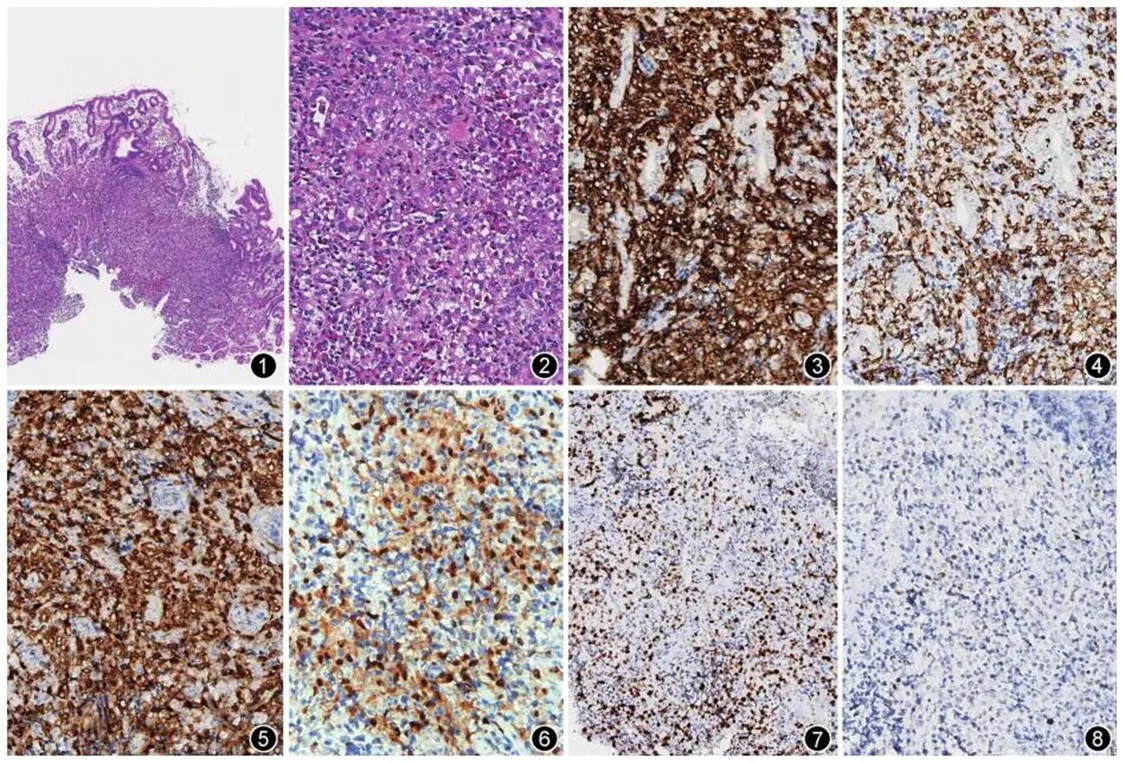
The patient had a hysterectomy accompanied by bilateral fallopian tube oophorectomy. There was a mass of 4.5×3×0.8 cm in the endometrial cavity. FIGO staging pT1aN0. The patient underwent immunohistochemical analysis, and the results were positive for ER, PR, negative for HER2, negative for PTEN, P53 wild - type, and MMR immunohistochemistry was shown to be dMMR type, of which MSH6 was single missing. No adjuvant treatment was received after the operation, and there has been no recurrence since the initial diagnosis (more than 6 months).
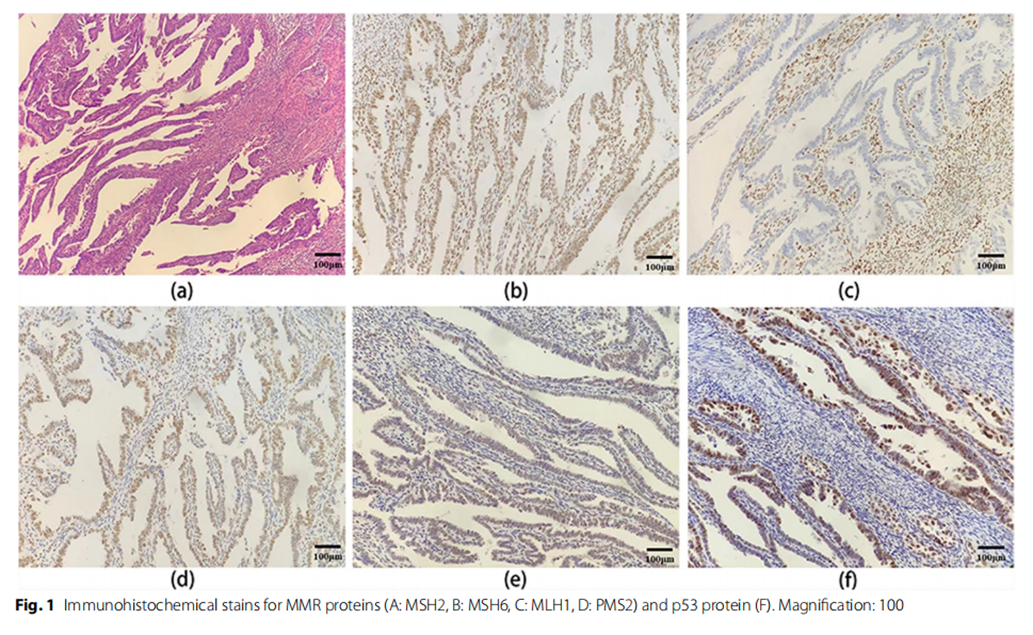
▲ Patient immunohistochemistry test results
03. Molecular test results
In this study, SpaceGen's molecular classification detection product for endometrial cancer was used for detection. 8 mutations were detected, and the MSS status detected by MSI was inconsistent with the dMMR status detected by IHC. It is speculated that it may be due to 2 meaningless mutations of MSH6 (p.E1234* and p.E1322*) causing protein truncation.
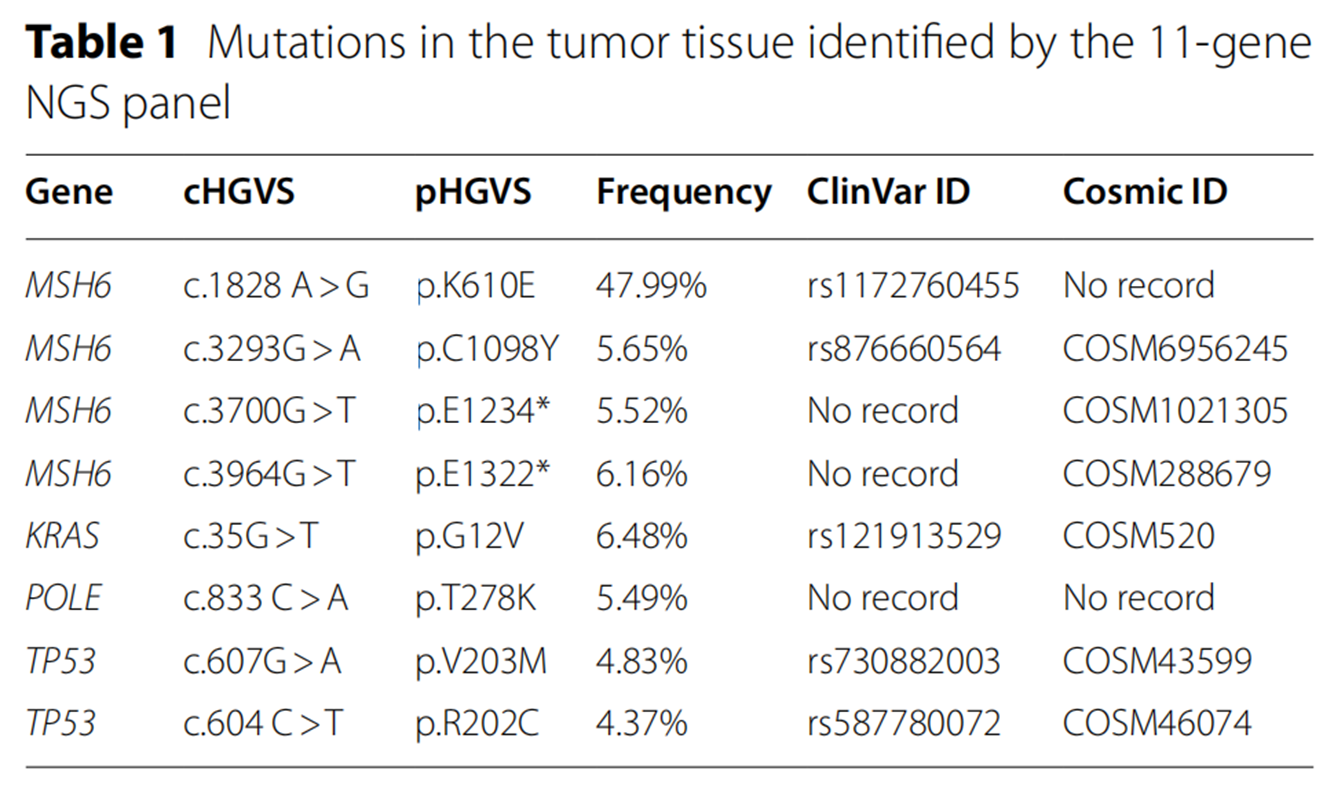
▲ SpaceGen endometrial cancer molecular classification: 8 mutations detected by SpaceGen molecular classification of endometrial cancer
In order to verify whether the T278K mutation is pathogenic (that is, it can cause the “super - mutation” characteristic), the conservatism of the mutation was first evaluated, and the results showed that the mutation occurred in a highly conserved location in the exonuclease domain of POLE ε. Subsequently, according to literature research, it was found that a case of missense mutation (T279M mutation) was reported in the same location with a POLE score of 3. In this study, a prediction tool was used to predict the pathogenicity of the two mutations, and the results showed that both mutations were pathogenic.
SpaceGen's panoramic gene was further used for testing. Blood was used as the embryonic control, TMB and other mutation characteristics were used, and the pathogenicity of the mutation was analyzed based on the POLE scoring system. The results showed that T278K had a POLE score of 4 and a TMB of 203.8 mut/Mb. C > A, C > G substitution and Indels proportions are in line with the POLE super - mutation characteristics. Therefore, this mutation is a new pathogenic POLE EDM, and it should be classified as a “POLE super - mutant” according to the molecular classification process of endometrial cancer.
In addition, the 2 individual cell nonsense mutations of MSH6 discovered this time may be related to deletion of MSH6 protein expression, but did not cause microsatellite instability. The two meaningless mutations in the MSH6 gene are all located in the ”AGA (TCT)" region, which is one of the characteristics of POLE super - mutation. Therefore, it is speculated that the deletion of MSH6 protein expression may be a secondary event driven by the POLE T278K mutation. The relevant mechanisms and the effects of patient treatment and prognosis need to be further studied and observed.
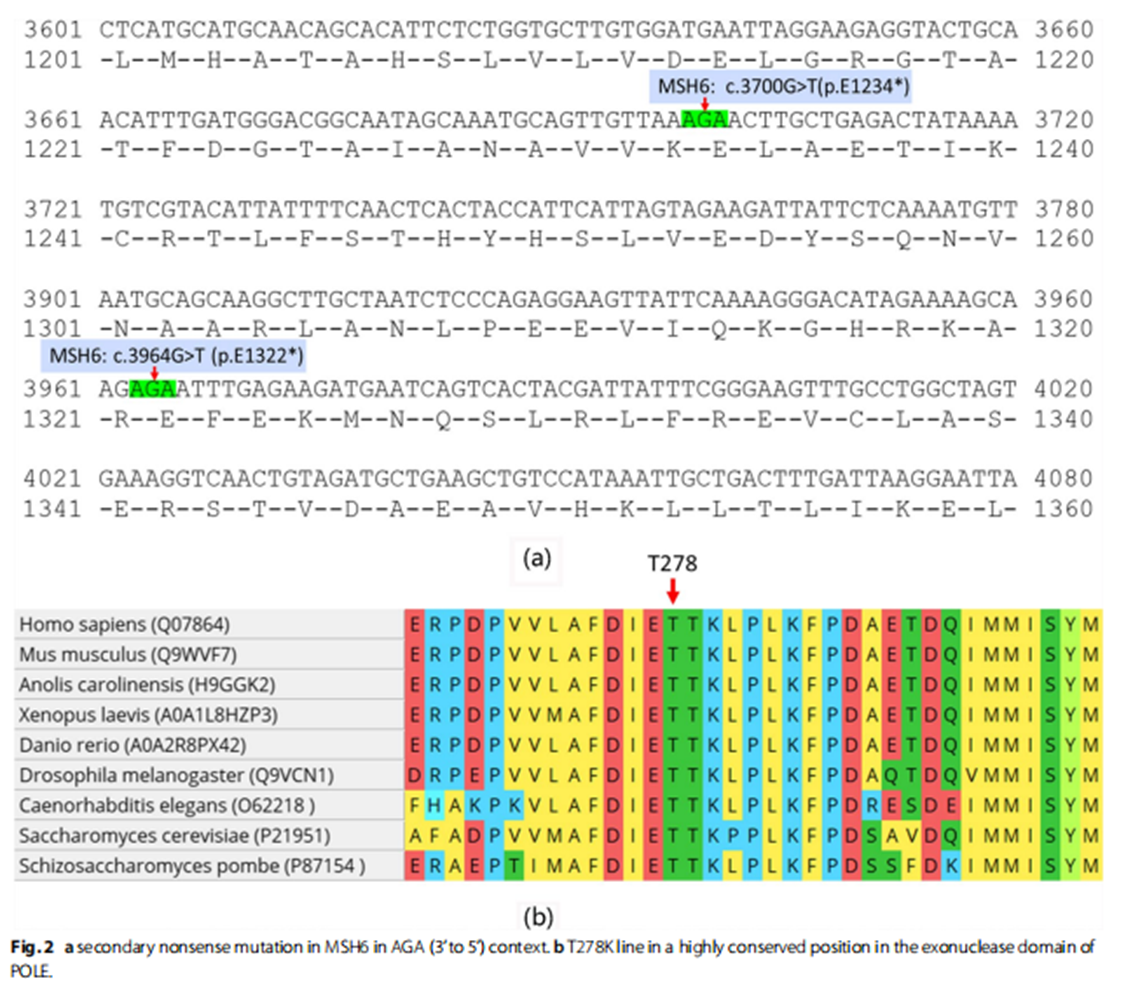
▲ The two mutations of MSH6 and the location of the T278K mutation occurred
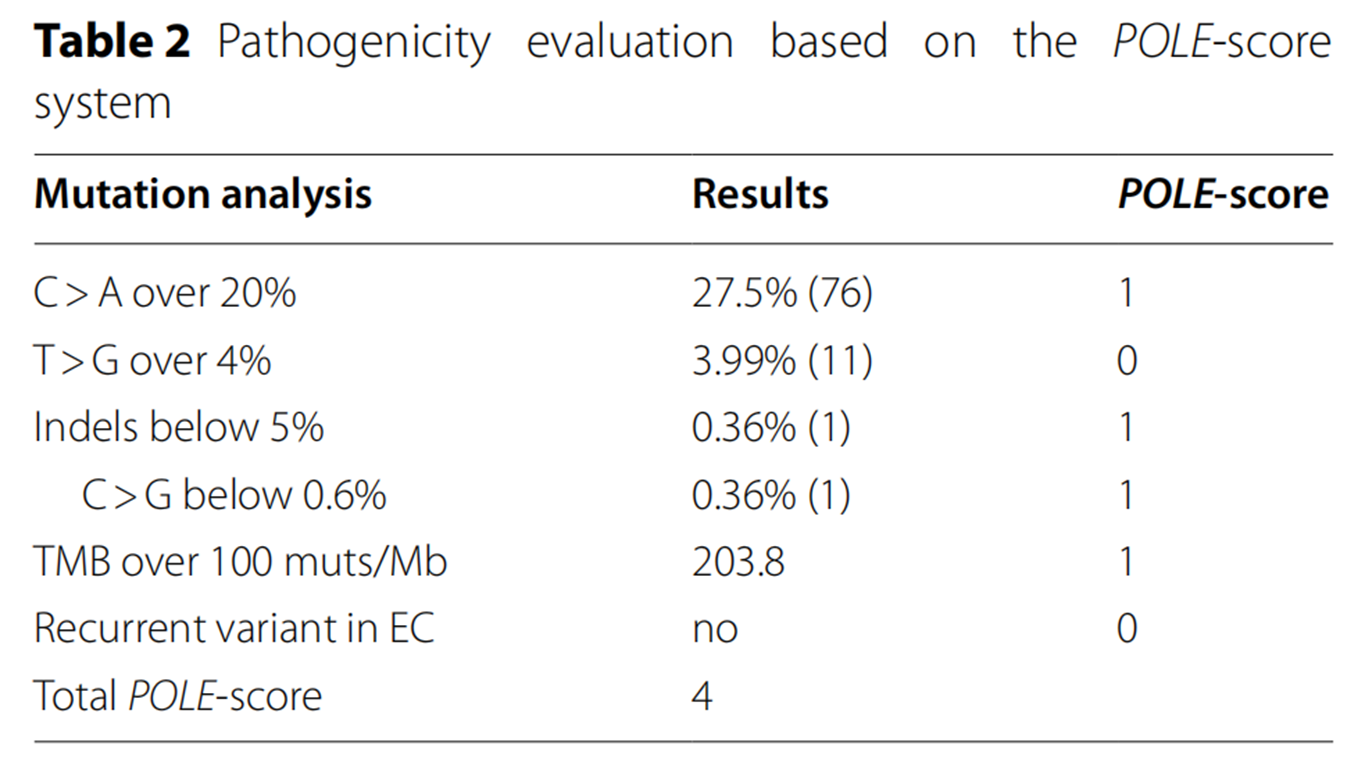
▲ POLE score of T278K mutation
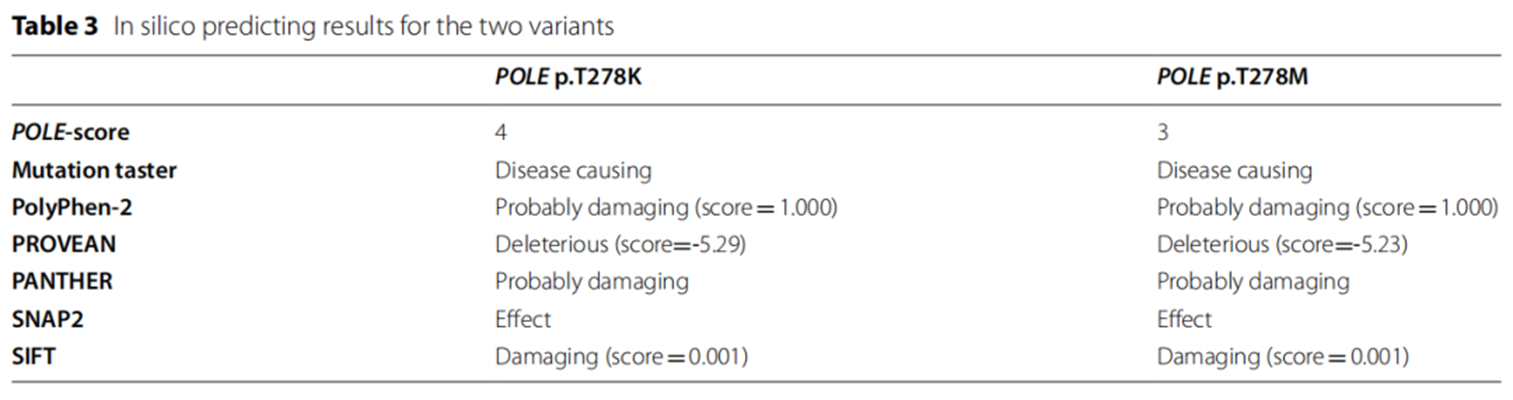
▲ The computer prediction tool evaluates the functional effects of these two mutations
04. Summary
This research report reported the discovery of a new POLE exonuclease domain mutation (POLE T278K mutation) in a patient with endometrial cancer. The mutation was verified as a pathogenic mutation by the POLE scoring system. Therefore, in the molecular classification of clinical endometrial cancer, the T278K mutation should be regarded as a “POLE super - mutant”.
References
[1] Cui J, Chen X, Zhai Q, Chen N, Li X, Zhang Y, Wang H, Bian X, Gao N, Chen D, Chen Z, Zhang S, Chen Y. A novel somatic mutation in POLE exonuclease domain associated with ultra-mutational signature and MMR deficiency in endometrial cancer: a case report. Diagn Pathol. 2023 Feb 10;18(1):19. doi: 10.1186/s13000-023-01287-y. PMID: 36765365; PMCID: PMC9912575.
[2] León-Castillo A, Britton H, McConechy MK, et al. Interpretation of somatic POLE mutations in endometrial carcinoma. J Pathol. 2020;250(3):323–35. https://doi.org/10.1002/path.5372






 闽公网安备35021202000745