

 EN
EN

The Clinical - Pathological Significance of Molecular Typing of Endometrial Cancer Inspired by the Film "Dear You"
The Clinical - Pathological Significance of Molecular Typing of Endometrial Cancer Inspired by the Film "Dear You"
The film "Dear You" portrays complex human emotions that transcend the boundaries of gender and fate through the emotional bonds among Nanzhi, Mu Sheng, and Shurou. Nanzhi remained unwed throughout her life, cherishing an ineffable affection.
Numerous individuals inevitably pose the question: Does she love Mu Sheng?
In fact, this question is fundamentally flawed. Such affection should not be simply categorized as love or non - love.
Just as in the era of precision medicine, when examining cancer, we no longer merely inquire whether it is "benign or malignant" but rather focus on its "molecular typing." Leveraging the structured development of "love and righteousness" in the film, this paper analyzes the molecular typing of Endometrial Carcinoma (EC), including POLE ultra - mutant, mismatch repair - defective (dMMR/MSI - H), p53 wild - type (NSMP), and p53 mutant, and discusses their core values in prognostic assessment and treatment decision - making [1].

From Empirical Medicine to Precise Typing
The traditional Bokhman typing (Type I/II) exhibits limited explanatory capacity for the heterogeneity of endometrial cancer (EC) and demonstrates poor inter - observer consistency. The 2021 ESGO/ESTRO/ESP guidelines incorporated the ProMisE four types (POLEmut, MMRd, NSMP, p53abn) into the risk - stratification framework for the first time. In 2023, the new FIGO staging system will further integrate the ProMisE four types (POLEmut, MMRd, NSMP, p53abn) into the risk - stratification framework. Molecular subtypes are documented as non - anatomical parameters in staging (e.g., ⅠAmPOLEmut,ⅡCmP53abn). The 2025 ESGO guidelines update reaffirms the guiding role of molecular typing in adjuvant therapy, with a descending trend for POLEmut and an ascending trend for p53abn [2 - 4].
Pathological Analysis of Molecular Typing and Film Plot Mapping
1. POLE-mutant : Nanzhi-style “super immunogenicity”

【Plot Mapping】
Nanzhi serves as the core driving force of the narrative. Its behavior is characterized by a high - density information volume (intensive batch processing and precise material delivery) and exhibits extremely strong survival resilience. Although POLEmut tumors are frequently accompanied by high - level or deep muscle infiltration, they stimulate potent anti - tumor immunity owing to an ultra - high mutation load, and the prognosis is the most favorable.
【Pathological mechanism】
(1) Molecular characteristics
Propelled by POLE mutations within the exonuclease domain of the POLE gene (EDMs, hot - spot mutations including P286R / S297F / V411L, etc.), the proofreading function of DNA polymerase ε is abolished, leading to an extraordinarily high mutation load (> 100 mut / Mb).
(2) Clinical significance
Despite the extremely high mutation load, this type of tumor exhibits remarkable immunogenicity, and there is significant infiltration of lymphocytes in the tumor microenvironment. In the prognostic model, patients with POLE - mut type demonstrate the most favorable progression - free survival (PFS) and overall survival (OS), and they present a good prognosis even in advanced stages.
(3) Treatment inspiration
Such patients display high sensitivity to immune checkpoint inhibitors (ICIs) and generally do not require excessive treatment (e.g., adjuvant radiotherapy and chemotherapy), which is in line with the principle of "achieving highly challenging goals in a minimalist way" proposed by Nanzhi.
2. Defective mismatch repair type (dMMR/MSI - H): Shurou - style“Genomic Instability”
【Plot Mapping】
Shurou is a passive recipient. Her life is replete with disruptions (such as the loss of children and separation), and the original order fails to be sustained. She is in a state of "unsuccessful restoration", which corresponds to the malfunction of the MMR system and the accumulation of microsatellite replication errors.
【Pathological mechanism】
(1) Molecular characteristics
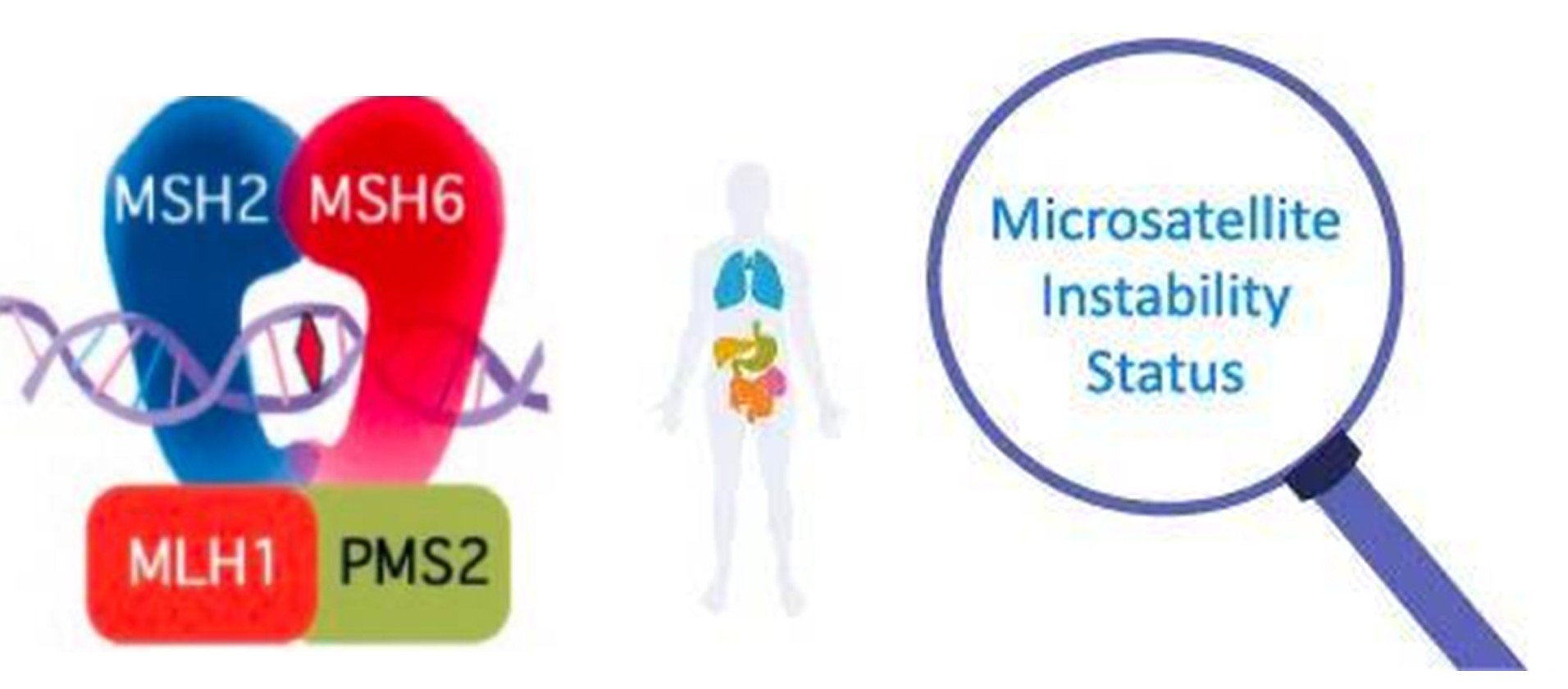
The deletion of MLH1, MSH2, MSH6, or PMS2 proteins leads to the accumulation of replication errors in microsatellite sequences, which is manifested as high - level microsatellite instability (MSI - H).
(2) Clinical significance
Approximately 30% of endometrial cancers fall into this category and are frequently associated with Lynch Syndrome. Tumors of this type also exhibit a high mutation load, and their prognosis lies between that of the POLE type and the p53 - abnormal type.
(3) Treatment inspiration
dMMR/MSI - H serves as a classic biomarker for immunotherapy. Just as Nanzhi attempted to mend the gaps in Shurou's life through letters, PD - 1/PD - L1 inhibitors can effectively reinstate the body's immune response to such tumor cells.
3. p53 wild type/No special molecular spectroscopy typing(NSMP): Musheng - style "Inert Steady State”

【Plot Mapping】
Musheng functions as a silent background element. He is devoid of extreme dramatic contradictions and represents the most widespread "normality." His existence forms the foundation of Nanzhi's spiritual domain. However, within this state of stability, certain molecular imprints (e.g., CTNNB1/β- catenin mutations) are latent.
【Pathological Mechanism】
(1) Molecular Characteristics
Absence of POLE mutation, absence of deficient mismatch repair (dMMR), p53 wild - type, and no special molecular profile.
(2) Clinical Significance
The prognosis is of a moderate nature. Nevertheless, subgroup analysis warrants attention. When accompanied by CTNNB1 (β- catenin) mutations, particularly exon 3 mutations, it is correlated with lymphatic vascular space invasion (LVSI) and an elevated risk of recurrence.
(3) Treatment Inspiration
Patients of this kind primarily depend on surgical staging, and adjuvant treatment requires careful consideration. This is analogous to Nanzhi's restraint on Musheng's emotions, which involves non - transgression of boundaries and maintenance of the original stable state.
4. p53 mutant/high copy number type (p53abn): The “collapse of order” in the end
【Plot Mapping】
The news of Mu Sheng's demise in the movie signified the complete disintegration of the original balanced structure, compelling Nanzhi to adopt extreme measures to re - organize the order. This is analogous to the loss of p53, which leads to large - scale chromosomal aberrations and unregulated genome proliferation.
【Pathological mechanism】
(1) Molecular characteristics
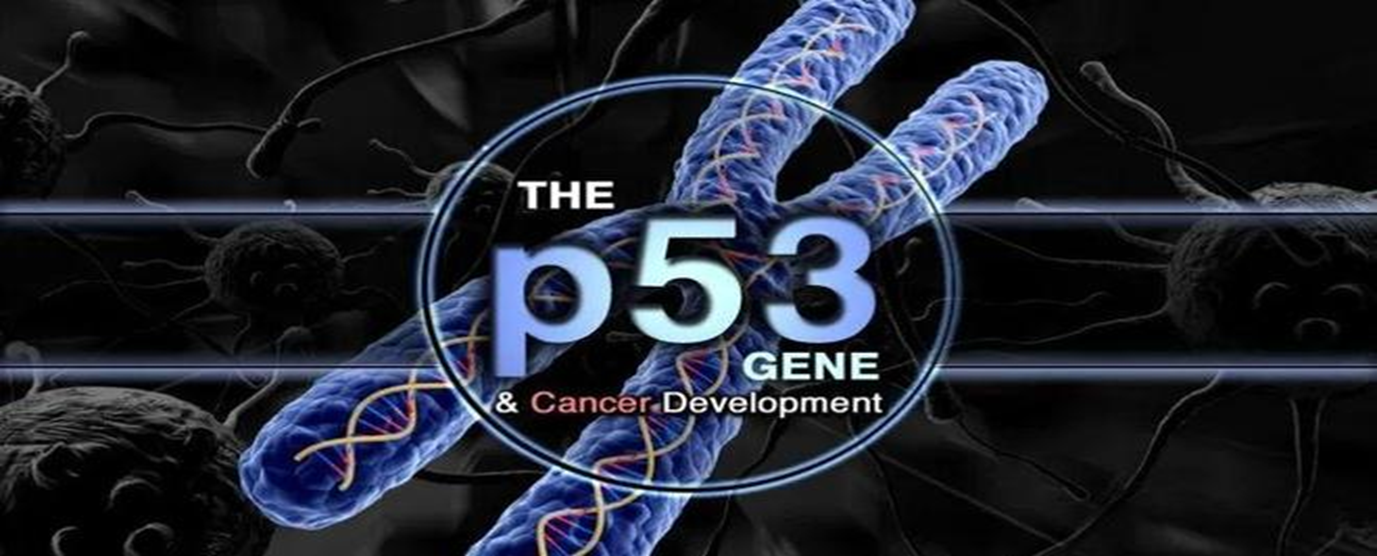
It is characterized by the overexpression or complete deletion of p53 (missense mutation or truncation mutation), accompanied by large - scale chromosomal gains and losses across the entire genome (high copy number variation).
(2) Clinical significance
The subtype with the highest degree of malignancy and the poorest prognosis is prone to recurrence and metastasis.
(3) Treatment inspiration
Standard treatment should incorporate intensive chemotherapy. Current research focuses for this subtype include HRD (homologous recombinant repair defect) scoring and the application of PARP inhibitors, aiming to repair genomic catastrophes as irreparable as Musheng's death.
Integrated Diagnosis and Precise Intervention
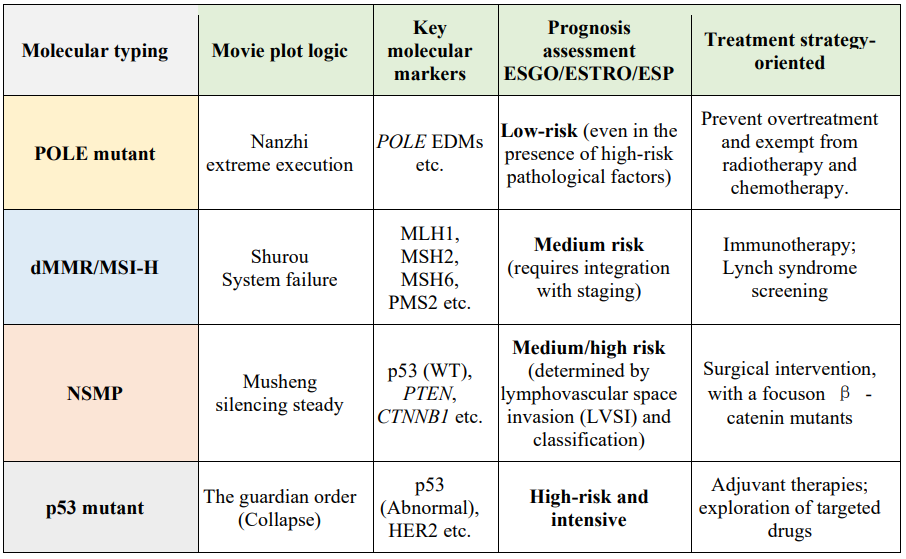
Just as the realm of cinema has transcended the simplistic narrative framework centered around love, the management of endometrial cancer has also advanced beyond the rudimentary histological typing paradigm. Molecular typing enables the categorization of patients into four distinct groups, each characterized by unique biological behavioral traits and treatment response features. Clinicians are required to conduct a precise analysis of patients' molecular profiles, much like the accurate interpretation of Nanzhi's overseas Chinese batch, in order to effect a transition from the "one - size - fits - all" treatment approach to the "tailor - made" practice of translational medicine.
References
1. Clin Transl Oncol. 2025 Dec;27(12):4368-4380.
2. BMC Cancer. 2025 Aug 11;25(1):1302.
3. Cancers (Basel). 2024 Feb 27;16(5):965.
4. Oncologist. 2025 Sep 1;30(9):oyaf273.






 闽公网安备35021202000745