

 EN
EN


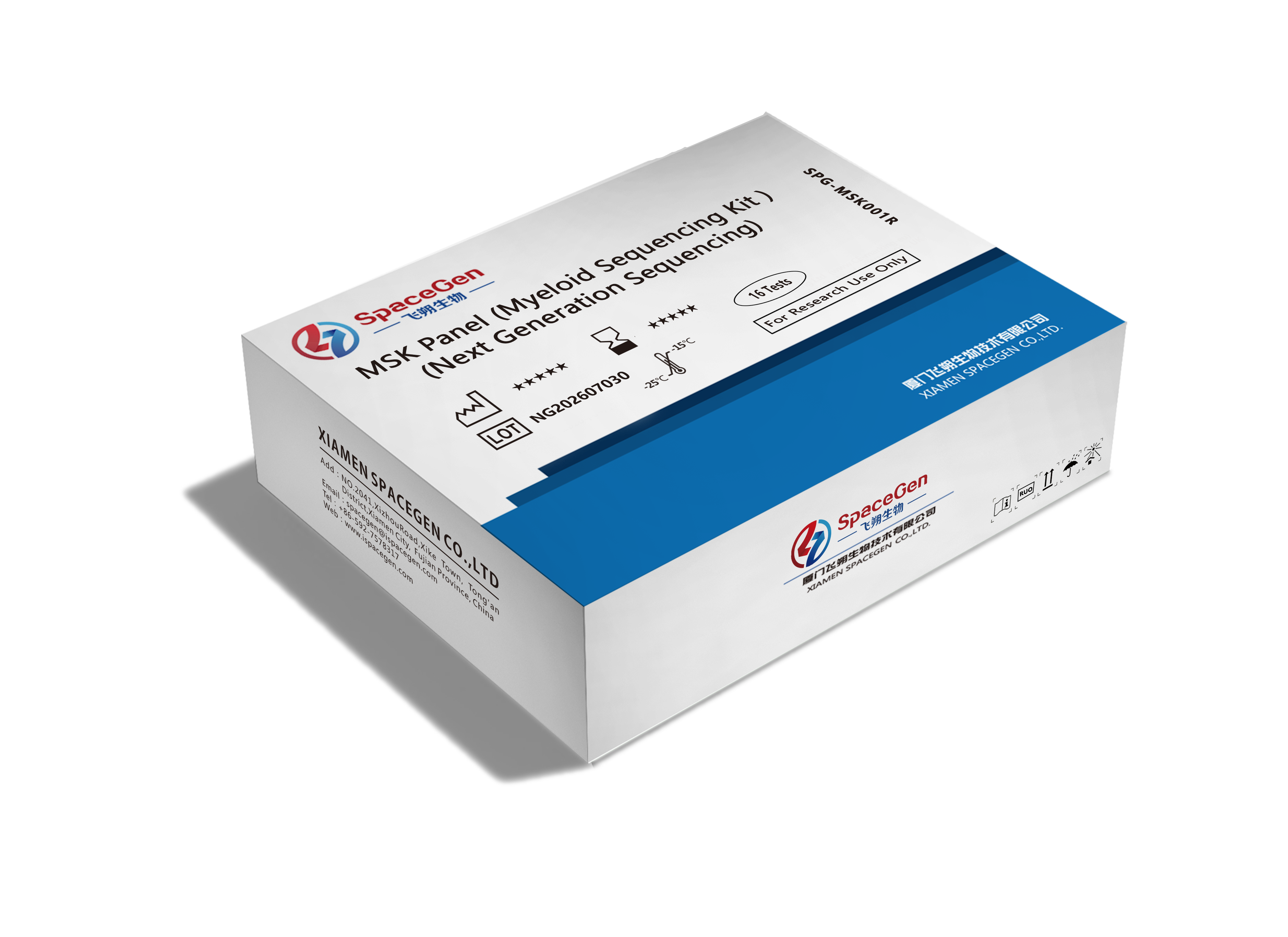

Myeloid malignancies include acute myeloid leukemia, myelodysplastic syndromes, myeloproliferative neoplasms, and other disorders with significant genomic heterogeneity. Various driver gene mutations, gene fusions, and aberrant gene expression are involved in disease initiation and progression. Genetic testing provides critical guidance for molecular subtyping, prognostic risk assessment and the selection of targeted therapeutic regimens.
Reports indicate that the major variant genes in myeloid malignancies include single-gene variants such as TET2, ASXL1, JAK2, and DNMT3A, as well as structural variants including BCR::ABL1, FGFR1::R, etc.
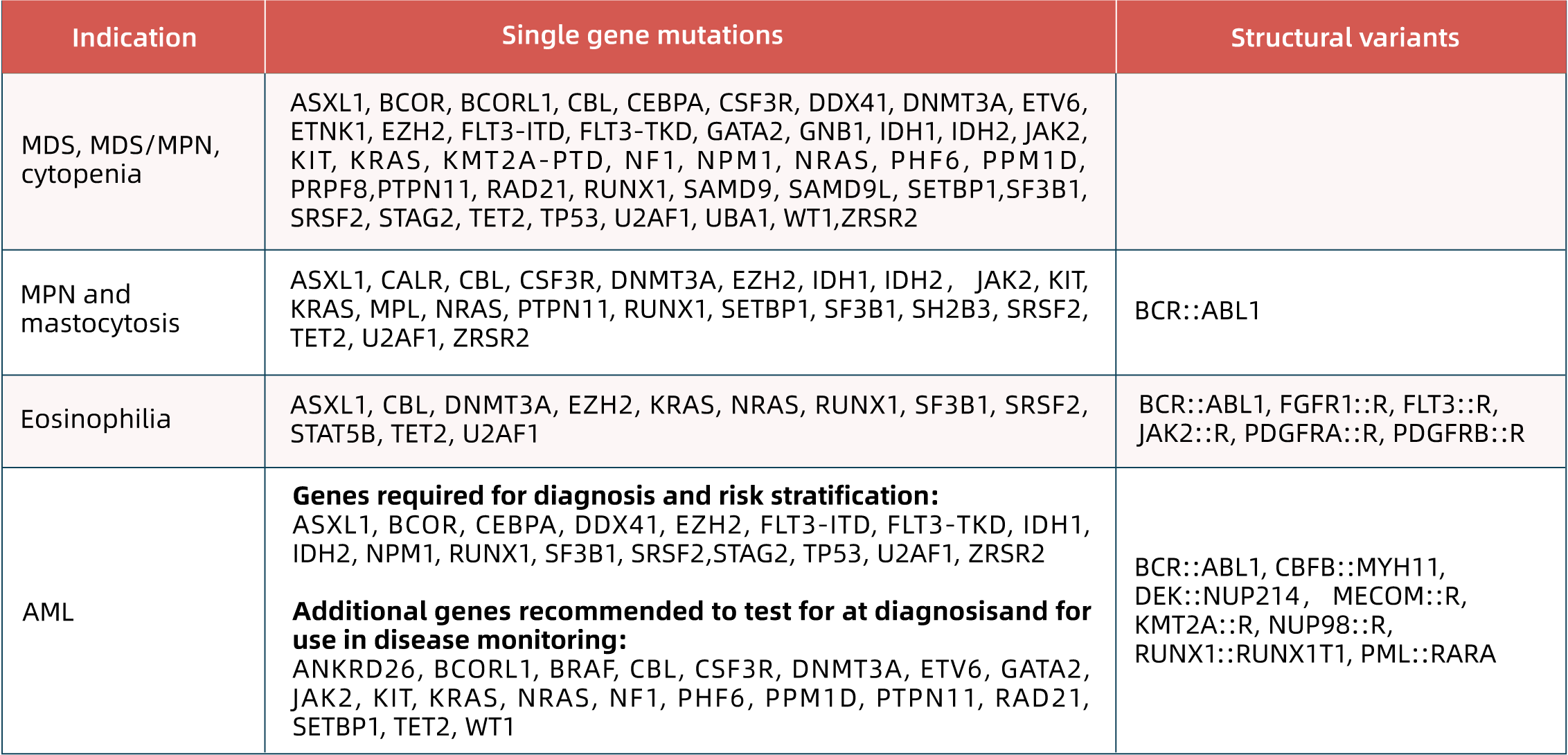
Combining next-generation sequencing and proprietary RingCap® technology, this kit is applicable to the detection of peripheral blood and bone marrow samples from patients with myeloid malignancies. It enables simultaneous analysis of 55 genes (including TET2, ASXL1, JAK2, etc.) at the DNA level, 29 fusion genes (including ABL1, BCL2, etc.) and 5 expression genes at the RNA level, covering multiple variant types: single nucleotide variants (SNVs), insertions and deletions (Indels), gene fusions, and gene expression.
Molecular Subtyping: Support molecular subtyping of myeloid malignancies to refine diagnosis.
Prognostic Evaluation: Stratify prognostic risks according to genomic features and assess progression and recurrence risk.
Targeted Therapy: Identify actionable targets and predict benefits from individualized targeted therapy.
Recurrence Surveillance: Provide molecular markers for treatment efficacy follow-up and recurrence surveillance.
Patients with various myeloid malignancies (acute myeloid leukemia, myelodysplastic syndromes, myeloproliferative neoplasms, etc.)

Multi-dimensional Combined Detection
DNA-RNA combined detection realizes simultaneous analysis of gene mutations, gene fusions, and gene expression in a single run
Comprehensive Coverage
Selectively covers 55 DNA genes, 29 fusion genes, and 5 expression genes, covering core molecular variants in myeloid neoplasms
Stable & Reliable
Specific primers and dedicated amplification system can sensitively detect low-abundance variants
Accuracy & Efficiency
RingCap® coupled with NGS supports rapid and precise multi-gene testing
1.Nucleic Acid Extraction
2.Library Preparation
3.Sequencing
4.One-stop Data Analysis
5.Report Generation




 闽公网安备35021202000745