

 EN
EN




Tumor initiation and progression are governed by complex mechanisms. While many tumor-associated genes have been discovered, the functions of numerous genes remain to be explored. Large-scale genomic testing comprehensively characterizes tumor genomic profiles and detects rare mutations in key genes. NGS large-panel sequencing guides individualized therapy, helps improve overall survival and offers more therapeutic options and clinical benefits for patients with advanced tumors.
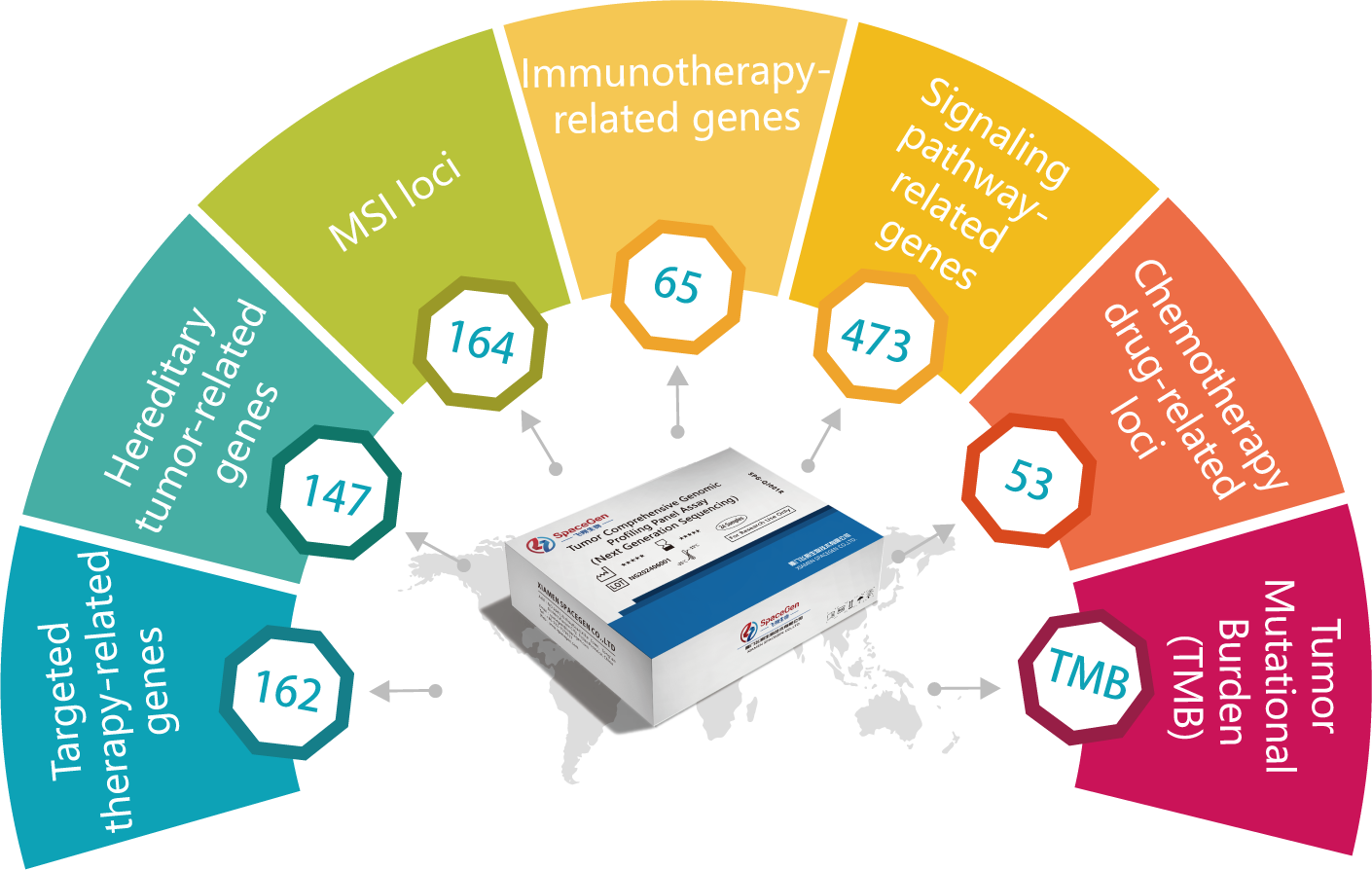
Covers 1,200 hotspot genes for solid tumors, including biomarkers such as MSI, TMB, HRR, HLA, immunotherapy resistance and hyperprogression, to comprehensively meet clinical testing requirements.
1、162——Targeted therapy-related genes
2、147 ——Hereditary tumor-related genes
3、164 ——MSI loci
4、65 ——Immunotherapy-related genes
5、473——Signaling pathway-related geness
6、53——Chemotherapy drug-related loci
7、TMB——Tumor Mutational Burden (TMB)
1.Newly diagnosed solid tumor patients: Pre-treatment testing supports treatment planning and prognosis evaluation before targeted, immune or chemotherapy.
2.Solid tumor patients with targeted drug resistance or chemotherapy failure: genomic testing reveals resistance mechanisms and discovers new actionable variants.
3.Persons with family history of tumors needing hereditary cancer risk evaluation.
4.Solid tumor patients with above clinical requirements when pathological tissue is unavailable.
Targeted Therapy: Provides comprehensive tumor variant profiles including oncogenic pathway genes and rare loci. It interprets tumor pathogenesis, uncovers resistance mechanisms and guides rational targeted drug administration.
Immunotherapy: Comprehensively assesses immunotherapy outcomes based on TMB, MSI status, HLA typing, neoantigen prediction, and genes linked to treatment response and hyperprogression.
Chemotherapy: 53 chemotherapy-associated genes to evaluate efficacy and toxicities and refine chemotherapy strategies.
Hereditary Risk: 147 hereditary cancer genes to evaluate risks of hereditary tumors.

Broad Coverage
Covers coding regions of solid tumor hotspots and fusion-related introns
Diverse Variant Detection
Supports detection of SNV, CNV, InDel and Gene Fusion.
Comprehensive Therapeutic Targets
Encompasses all FDA/NMPA-approved targeted therapies
Integrated Immune Profiling
MSI, TMB, MMR and immune regulatory factors are analyzed to evaluate PD-1/PD L1 treatment response
Continuous Database Refresh
Regular update and maintenance of gene-drug database
Flexible Customization & Upgrades
Sustained upgrade and customization services support diversified research demands
01 Nucleic Acid Extraction
02 Library Preparation
03 Sequencing
04 One-stop Data Analysis
05 Report Generation











 闽公网安备35021202000745