

 EN
EN



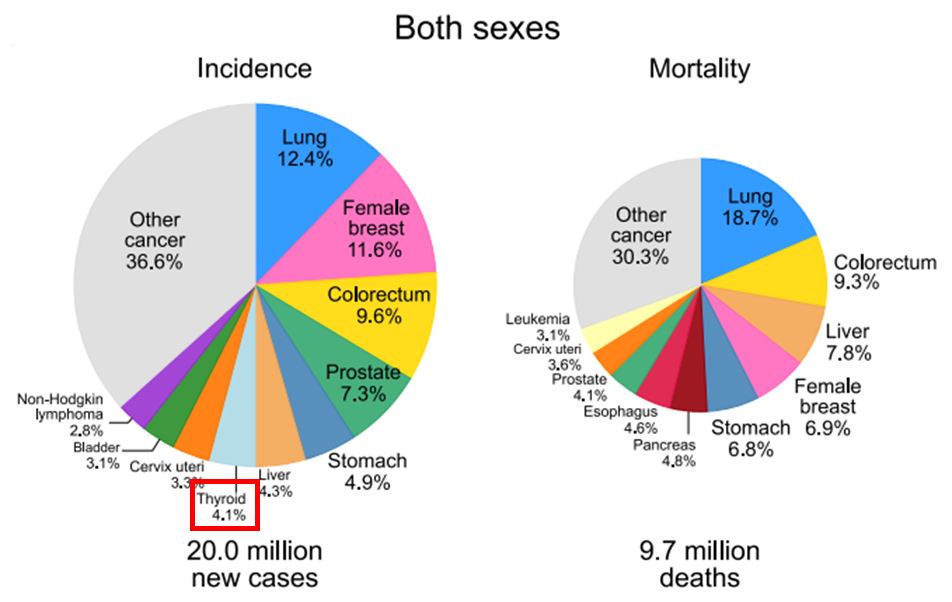
Over the past 30 years, the incidence rate of thyroid cancer has shown a sustained and rapid upward trend in many countries and regions around the world, including China. In 2022, the number of new cases globally reached nearly 800,000. Despite the gradual increase in the 5-year survival rate of thyroid cancer (reaching 84.3%), many patients still experience tumor recurrence or metastasis.
To understand the pathogenesis of thyroid carcinoma from the genetic level,identify low-risk and high-risk thyroid carcinoma,so as to make a clear diagnosis and scientific individualized management,avoid overtreatment,and establish a precise,standardized and individualized management model...
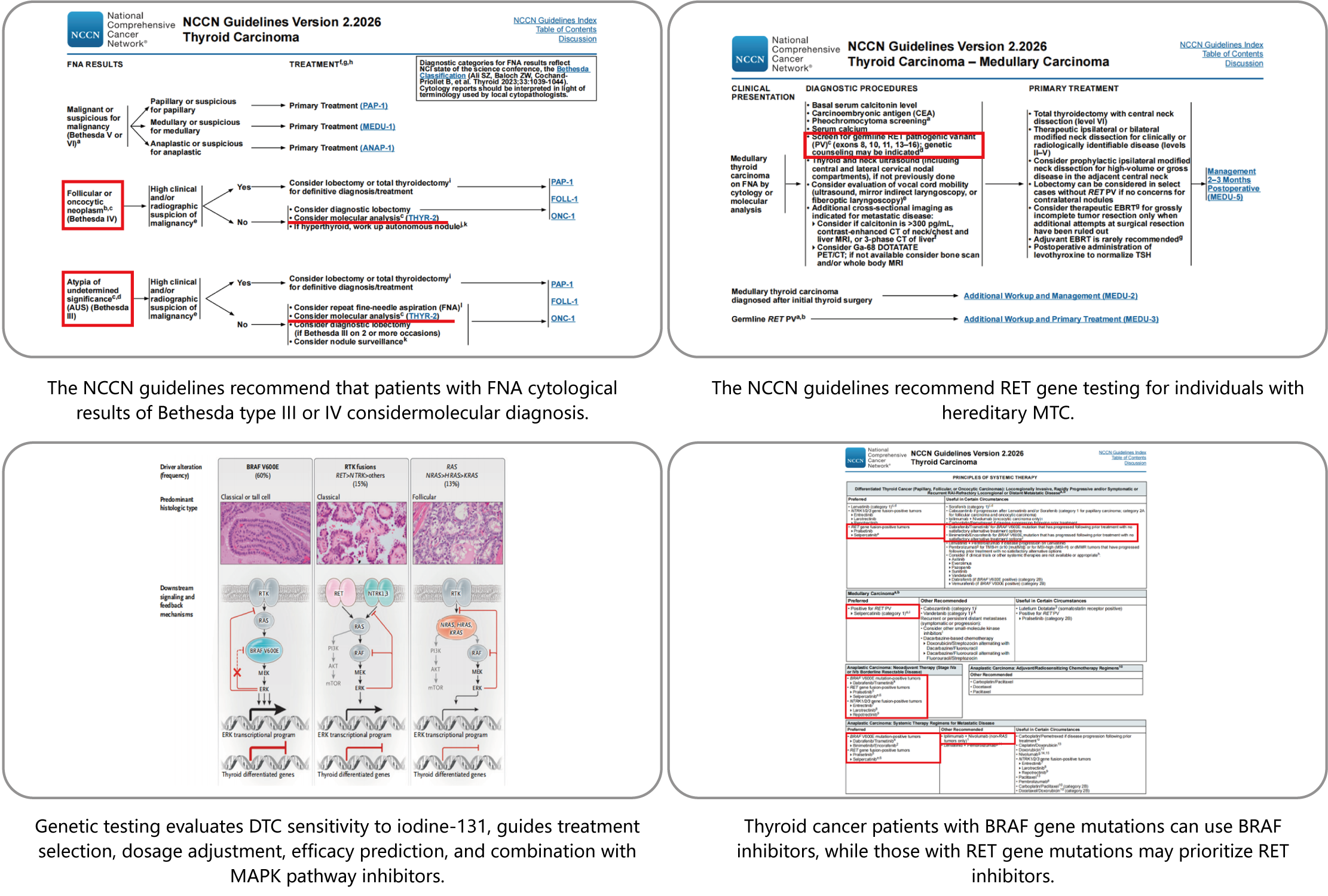

1.Patients with thyroid nodules with uncertain results diagnosed by US-FNA cytology ;
2.Patients undergoing surgical treatment, radioactive iodine therapy or ablation ;
3.Patients with advanced thyroid carcinoma to be selected for targeted therapy ;
4.Patients with hereditary MTC and their families.
( 1 ) To assist the diagnosis of benign and malignant thyroid nodules and the classification of thyroid carcinoma.
( 2 ) To guide the choice of surgical plan.
( 3 ) Guidance of radioactive iodine therapy
( 4 ) Guiding targeted therapy
( 5 ) Assessing genetic risk

Cost-effective
Covering 16 core driver genes of thyroid carcinoma, assisting pathological diagnosis and subtype classification.
High Sensitivity
Gene mutations with frequencies as low as 1 % can be detected in 5 ng FNA samples or 25 ng tissue samples.
Leading Technology
Using RingCap® independent patent technology, the database construction method is simple, the operation steps are few, and the turn around time is short.
Strong Compatibility
Compatible with mainstream platforms on the market.
1. Nucleic Acid Extraction
2. Library Preparation (3.5 hours total time)
3. Sequencing
4. Auto-data Analysis
5. Report




 闽公网安备35021202000745