

 EN
EN


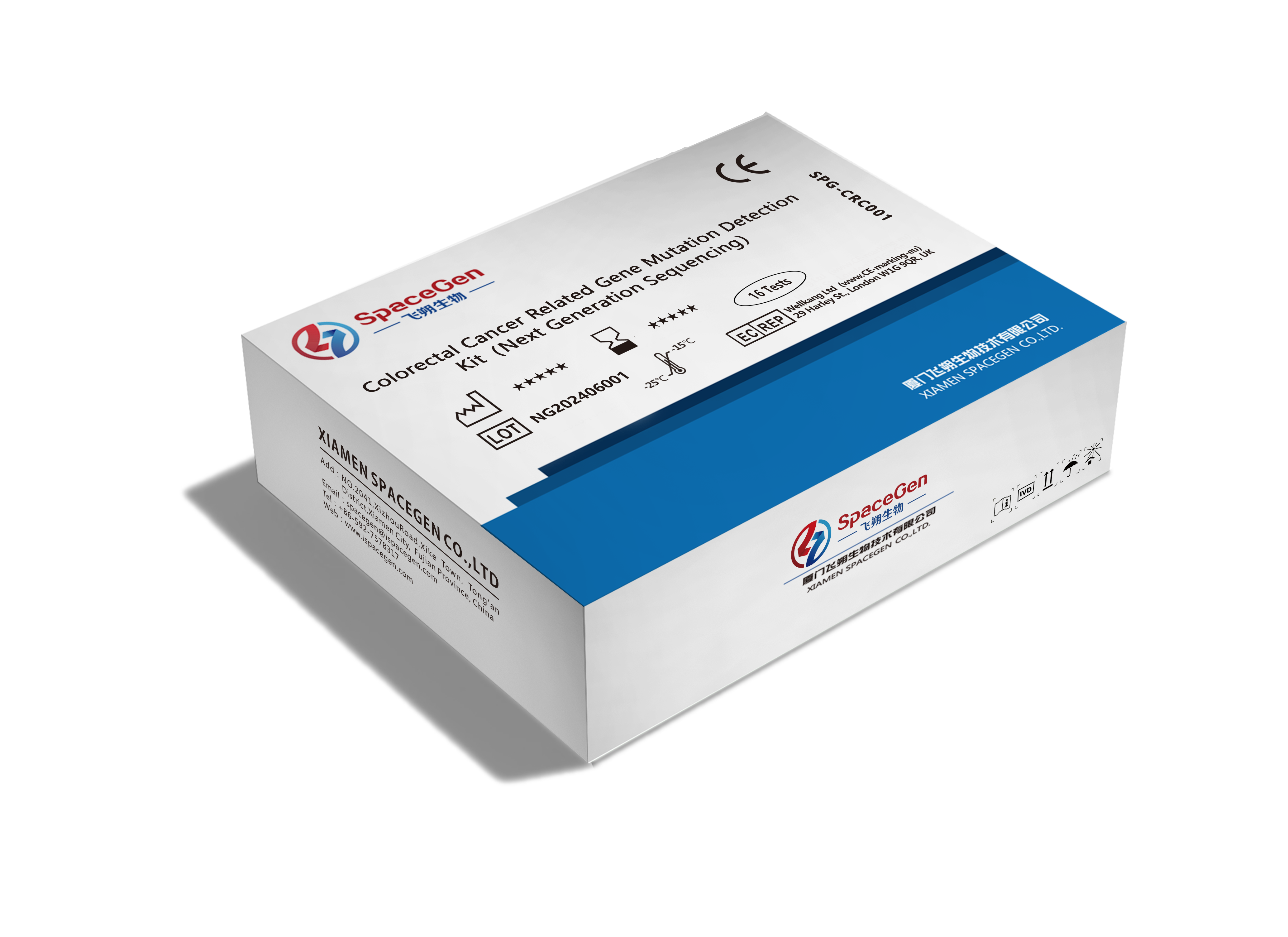

Colorectal cancer (CRC) ranks third in global cancer incidence and second in cancer related mortality. CRC management involve surgery, chemotherapy, radiotherapy, imaging, pathology, and endoscopy. Systemic medical therapy is a critical component, and gene testing prior to treatment is recommended to guide targeted therapy.
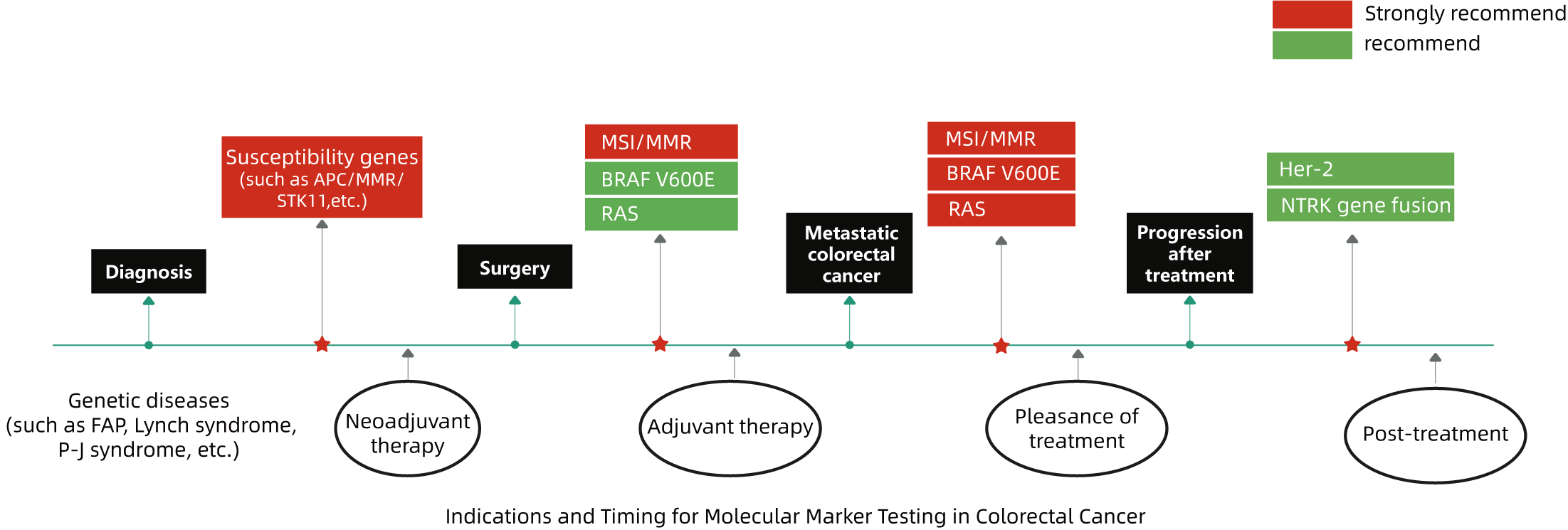
The kit covers the common molecular detection markers for colorectal cancer,MSI, KRAS, NRAS, BRAF V600E, HER2 amplification, UGT1A1/DPYD variants, PIK3CA hotspot regions, and TP53 coding regions.
1.Resectable non mCRC patients – testing before adjuvant chemotherapy aids in regimen selection;
2.Unresectable non mCRC patients – testing before treatment decision guides conversion or palliative therapy options;
3.All mCRC patients – testing before comprehensive treatment to tailor therapy based on RAS/BRAF and MSI status;
4.mCRC patients refractory to standard therapy – testing to identify suitable targeted or immunotherapeutic agents;
5.Patients clinically suspected of Lynch syndrome – testing for Lynch screening.
1. RAS, BRAF, HER2 mutation status – guides use of EGFR monoclonal antibodies, BRAF/MEK inhibitors, HER2 inhibitors, and provides prognostic information for CRC.
2. UGT1A1 and DPYD – guides irinotecan, 5-FU, capecitabine, and tegafur dosing.
3. MSI testing – predicts response to immune checkpoint inhibitors.
4. MSI and BRAF V600E – indicate Lynch syndrome risk.

Comprehensive Coverage
Covers mandatory genes recommended by CRC guidelines and consensus, along with selected optional genes and MSI status
MSI Status Testing
Employs 34 mononucleotide repeat markers, effectively eliminating polynucleotide polymorphism interference and enabling single sample (tumor only) testing
High Sensitivity
Identifies mutations down to 1% VAF within 25 ng DNA
Simple Operation
Based on the independent patent technology RingCap®, requiring only two steps for library construction
1. Nucleic Acid Extraction
2. Library Preparation (3.5 hours total time)
3. Sequencing
4. Auto-data Analysis
5. Report




 闽公网安备35021202000745