

 EN
EN


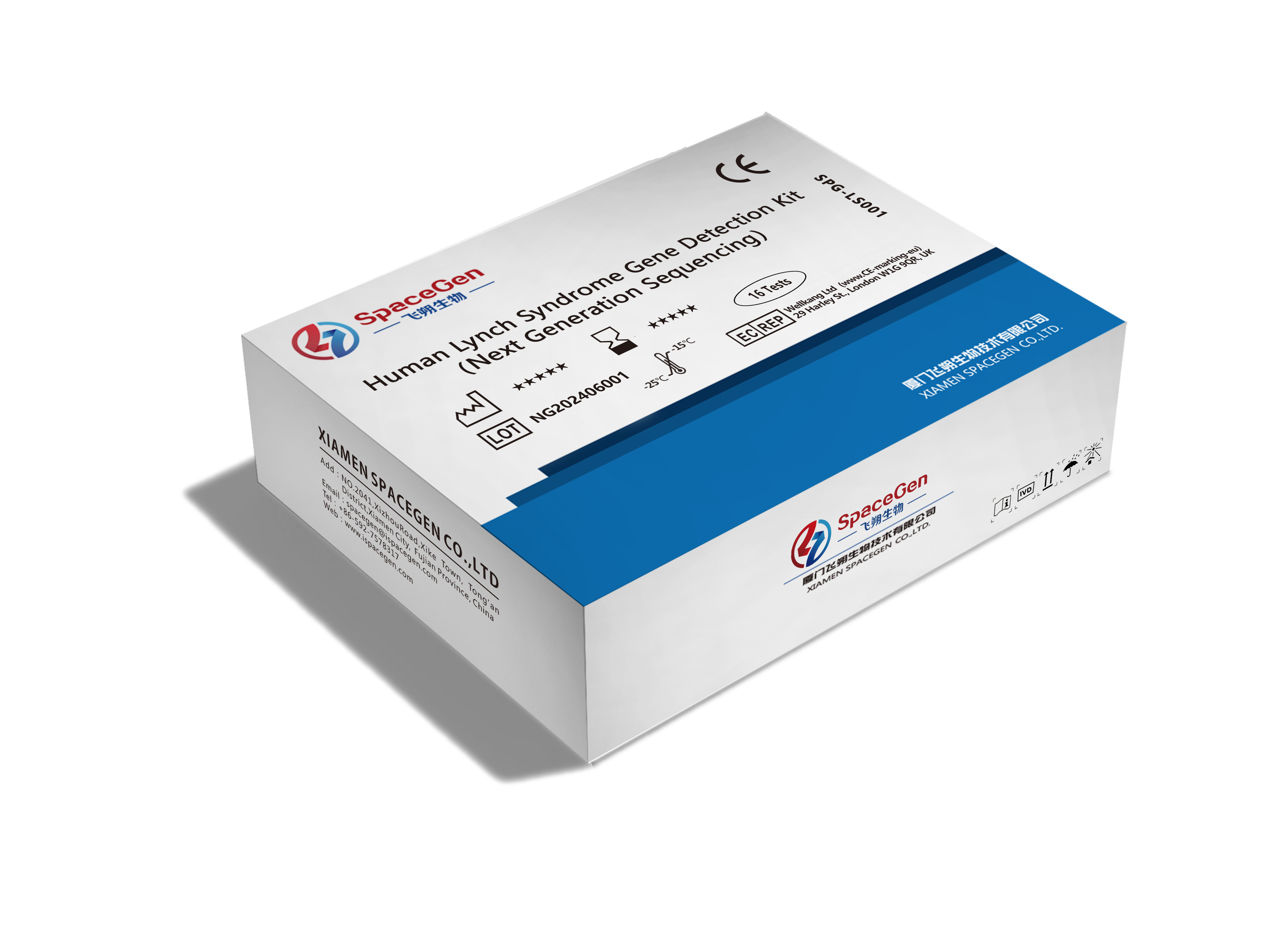

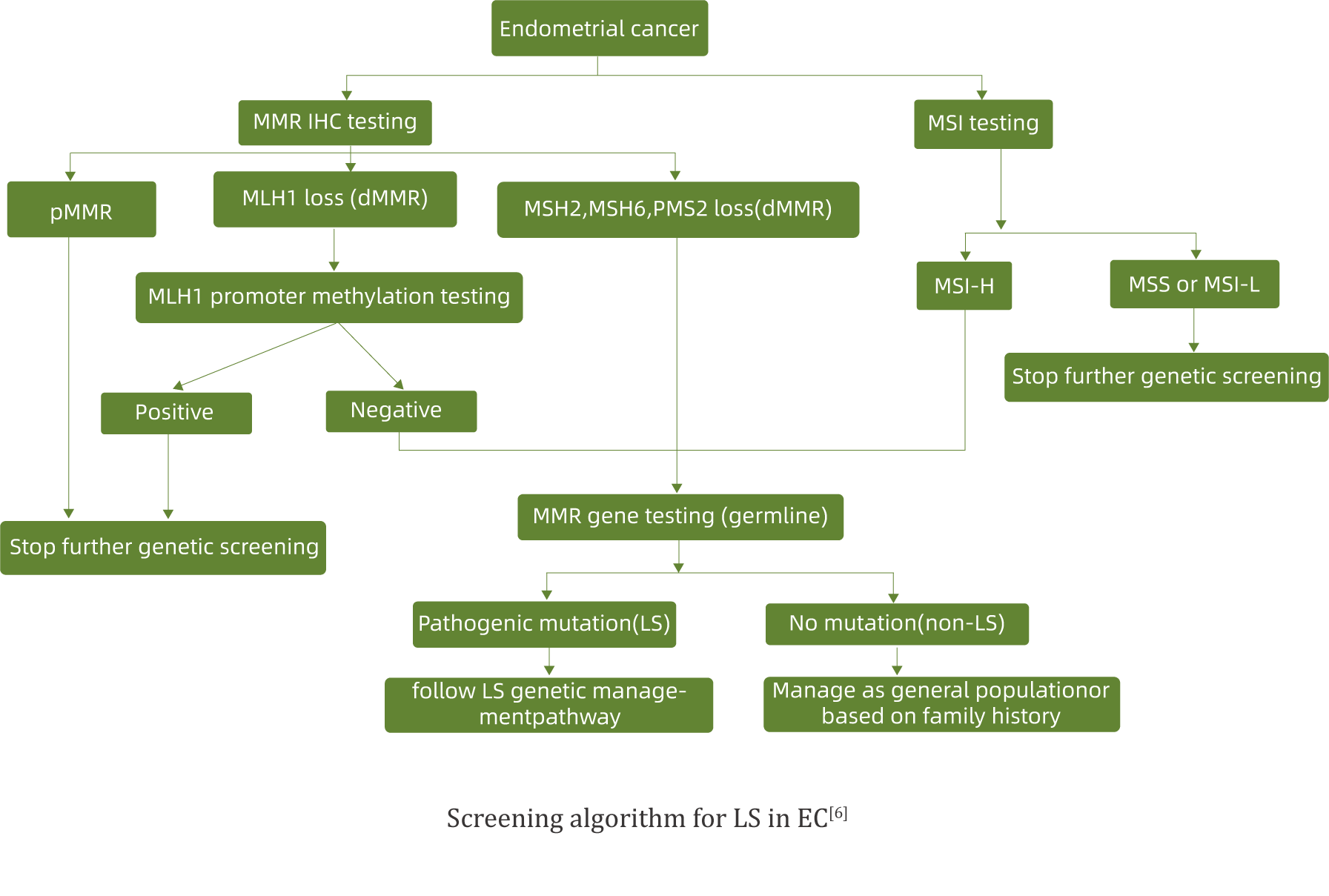
Lynch syndrome (LS) accounts for approximately 2%–4% of all colorectal cancers (CRC) [1] and 3%–5% of all endometrial cancers (EC) [2]. LS is primarily caused by germline mutations in mismatch repair (MMR) genes; rare cases result from germline 3′ deletions of EPCAM upstream of MSH2, leading to secondary MSH2 silencing [3]. These alterations are associated with deficient MMR (dMMR) and microsatellite instability-high (MSI-H) in tumor tissues. LS carriers have elevated risks for CRC (up to 80%) and EC (up to 60%), as well as increased risks for other cancers (e.g., gastric, small bowel, urothelial, and ovarian) [4]. Spacegen and collaborators have also reported LS-associated penile cancer [5]. All major guidelines recommend germline MMR gene testing for CRC, EC, and other tumor patients who are positive on MMR immunohistochemistry (IHC) or MSI screening, and negative for MLH1 promoter methylation or BRAF V600E mutation, to aid in LS diagnosis [1,2,6].
Using high-throughput sequencing, the germline panel covers the coding regions and exon-intron boundaries of MLH1, PMS2, MSH2, MSH6, and EPCAM. The tissue panel includes these five genes plus BRAF V600E.
[1] NCCN Genetic/Familial High-Risk Assessment: Colorectal, Endometrial, and Gastric (v1.2026)
[2] Chinese Expert Consensus on Molecular Testing for Endometrial Cancer (2021)
[3] Front Oncol. 2022 Mar 4;12:856452.
[4] Genes (Basel). 2023 Nov 9;14(11):2060.
[5] Urol Int. 2024 Sep 2:1-5.
[6] CSCO Guidelines for Endometrial Cancer (2026)
[7] Obstet Gynaecol. 2021 Jan;23(1):9-20.
[8] Cancer. 2022 Mar 15;128(6):1206-1218.
1.Aids in confirming Lynch syndrome diagnosis;
2.Suggests potential immunotherapy benefit for LS associated tumor patients.
1. CRC, EC, gastric cancer, or other tumor patients with dMMR/MSI H in tumor tissue testing (including those negative for MLH1 methylation and BRAF V600E);
2. Patients with proficient MMR (pMMR) or microsatellite stable (MSS) tumors but clinically suspected of LS;
3. Blood relatives of individuals with confirmed LS;
4. Patients with an MMR gene pathogenic variant detected in tumor tissue, but germline origin uncertain;
5. Consider using the tissue panel as an alternative to MMR/MSI screening to reduce LS underdiagnosis.
1. Nucleic Acid Extraction
2. Library Preparation (3.5 hours total time)
3. Sequencing
4. Auto-data Analysis
5. Report




 闽公网安备35021202000745