

 EN
EN


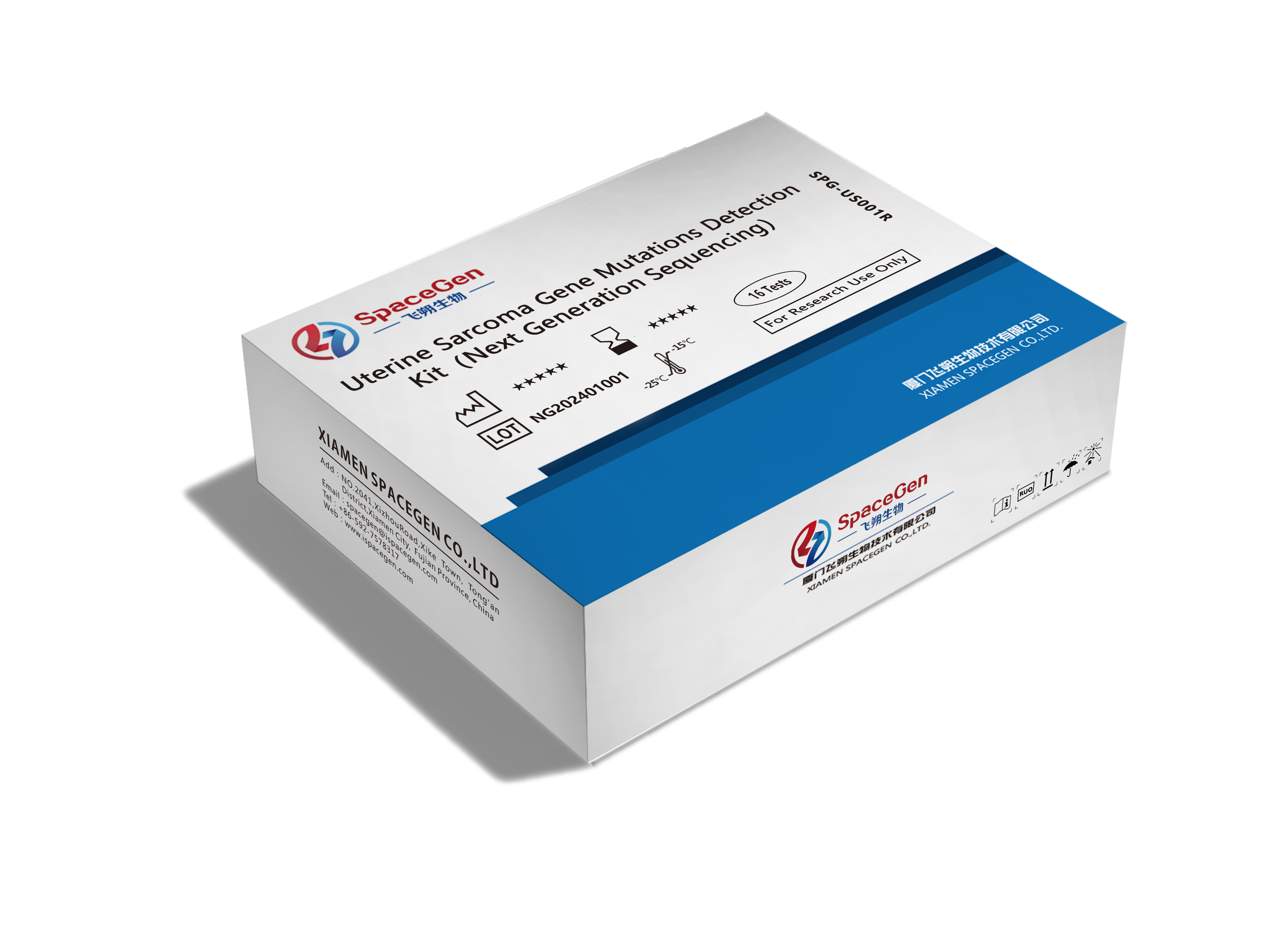

Uterine sarcoma is a kind of malignant mesenchymal tissue-derived tumor, accounting for about 1% of all female genital tract malignant tumors, accounting for 3% to 7% of uterine malignant tumors [1]. The overall prognosis of uterine sarcoma is poor. The 5-year survival rate of stage I-II is 45-50 %, and the 5-year survival rate of advanced stage is 0-15 % [2]. The histological types of uterine sarcoma are complex. Uterine leiomyosarcoma ( uLMS ) is the most common (40 %~50%), followed by low-grade endometrial stromal sarcoma ( LGESS ) [1], and there are more than ten other rare subtypes.
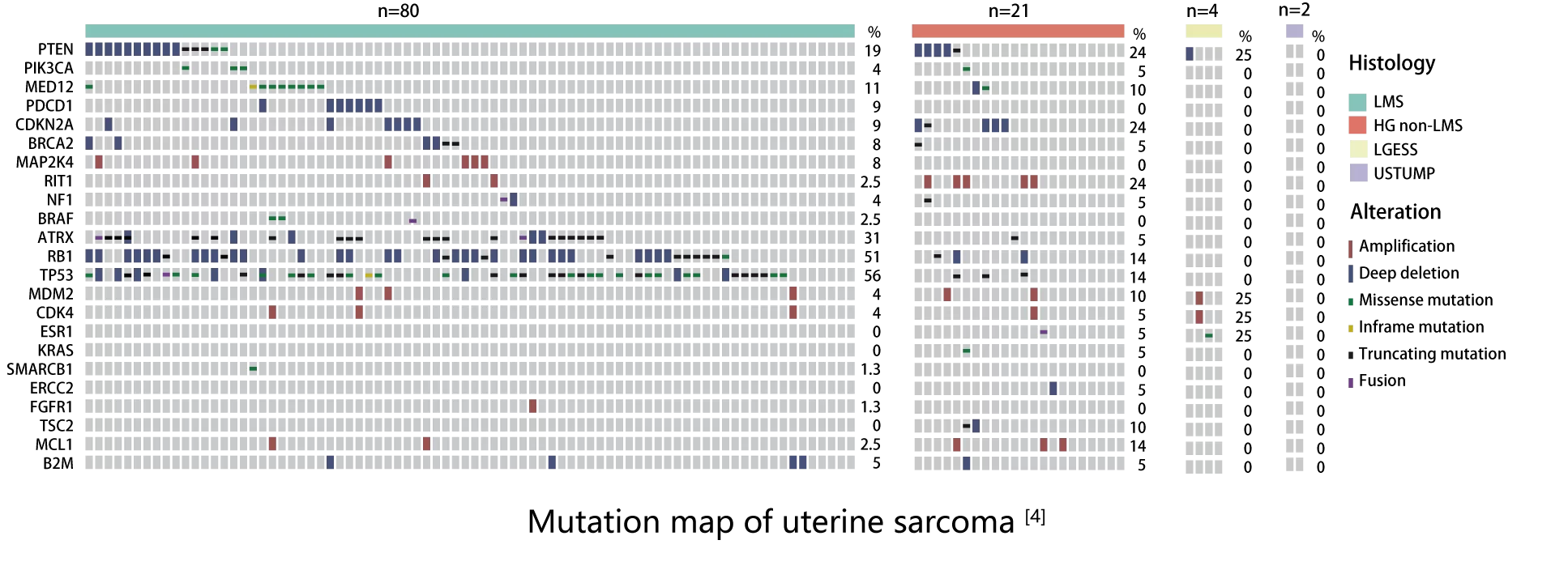
The pathological diagnosis of uterine sarcoma indicates that there is cross-expression between immunohistochemical markers of different types of uterine sarcoma. Molecular detection is recommended for conditional units, and second-generation sequencing is one of the main detection methods. For some previously unclassified uterine sarcomas or newly emerging subtype classifications, the diagnosis requires the support of molecular test results [3]. Previous studies have found that TP53, RB1, ATRX, PTEN and BRCA2 gene mutations / deletions are common in uLMS [4], while multiple forms of gene fusion are more common in ESS [5].
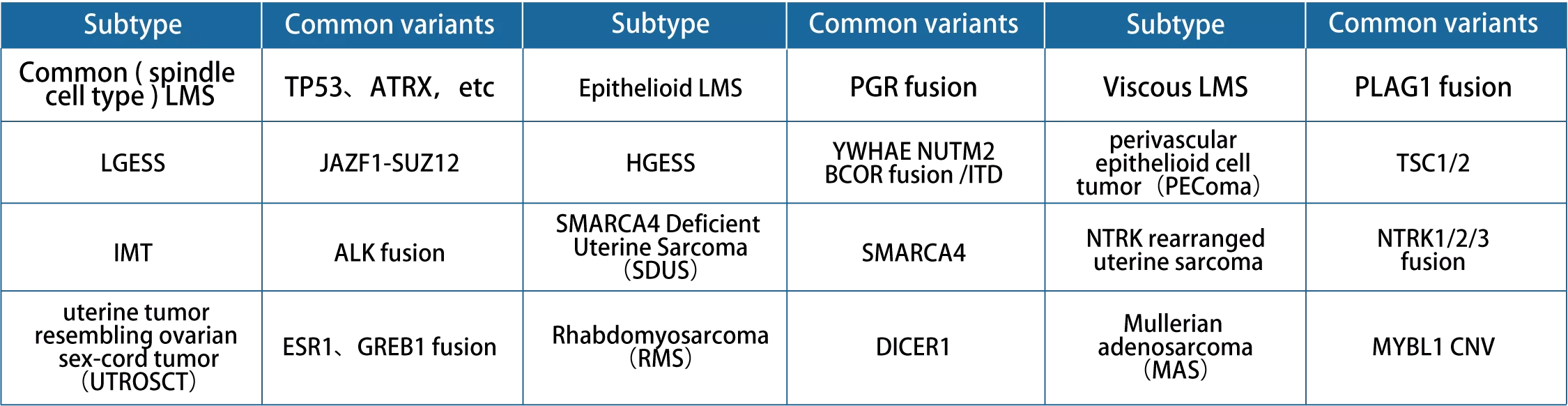
In addition to auxiliary typing and prognosis, the NCCN guidelines recommend that comprehensive genomic testing can be used for metastatic patients to find opportunities for targeted therapy of pan-cancer species. For patients with recurrence, metastasis, and inoperability, TRK inhibitors can be used for tumors with positive NTRK gene fusion, ALK inhibitors can be used for inflammatory myofibroblastic tumors ( IMT ) with ALK translocation, and PARP inhibitors can be used for Leiomyosarcoma (LMS) with BRCA ( mainly BRCA2 ) mutations. [5]

[1] Guideline for diagnosis and treatment of uterine sarcoma(2021)
[2] Pathology. 2007 Feb;39(1):55-71.
[3] Specification for pathological diagnosis of uterine sarcoma
[4] Clin Cancer Res. 2020 Jul 15;26(14):3881-3888.
[5] NCCN Uterine Neoplasms Guidelines 2026 v3
[6] Geburtshilfe Frauenheilkd. 2021 Oct;81(10):1145-1153.
CORE GENECORE [5-6]

1.Auxiliary uterine sarcoma subtype classification and prognosis interpretation ;
2.Detecting targeted therapeutic genes to assist in the formulation of clinical treatment plans.

Scientific Rigor
The classification of uterine sarcoma is complex, and the results of morphology and immunohistochemistry are crossed. The guidelines recommend NGS detection for assisted typing.
Professional Design
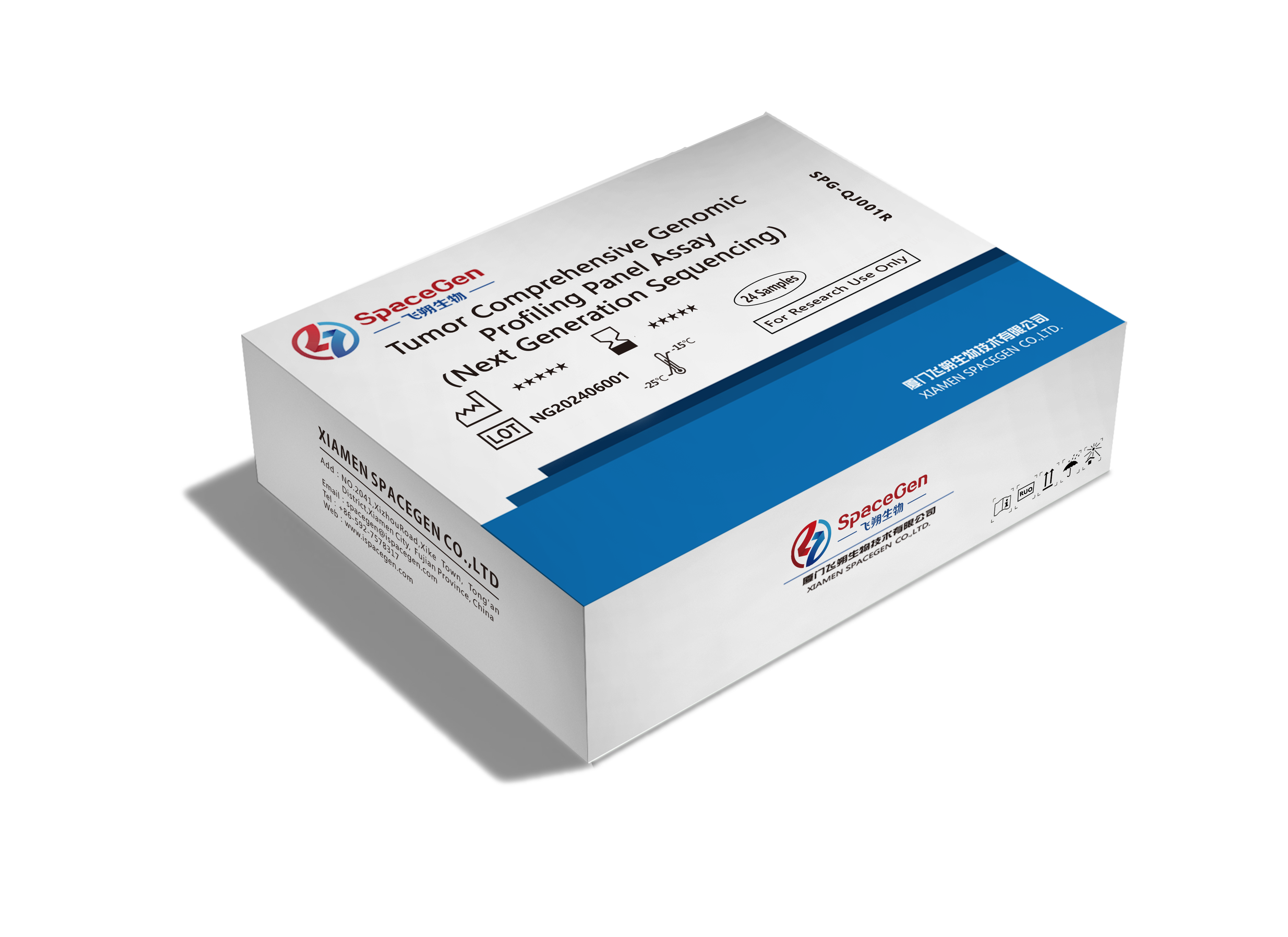
A rare medium-sized panel designed for uterine sarcoma on the market, which is more professional and cost-effective than the pan-cancer large panel.
Comprehensive Detection
DNA + RNA level co-detection was used to cover common mutations, copy number changes and gene fusion in various subtypes of uterine sarcoma.

Leading Technology
DNA detection using RingCap® patented technology, RNA detection using unilateral primers, can effectively detect known and unknown fusion forms.
1. Nucleic Acid Extraction
2. Library Preparation (3.5 hours total time)
3. Sequencing
4. Auto-data Analysis
5. Report




 闽公网安备35021202000745