

 EN
EN




According to the statistics from the WHO, there were 19.05 million new cancer cases worldwide in 2024[1].Previous studies have shown 5%–10% are estimated to be hereditary cancers[2]. Most hereditary cancers follow autosomal dominant inheritance, with a 50% chance of passing a pathogenic germline variant to offspring, leading to familial clustering. Genetic testing can identify pathogenic variants, enabling tailored treatment for patients, assessing risks for additional cancers, and providing actionable risk management for high-risk individuals to achieve early screening, detection, intervention, and treatment.
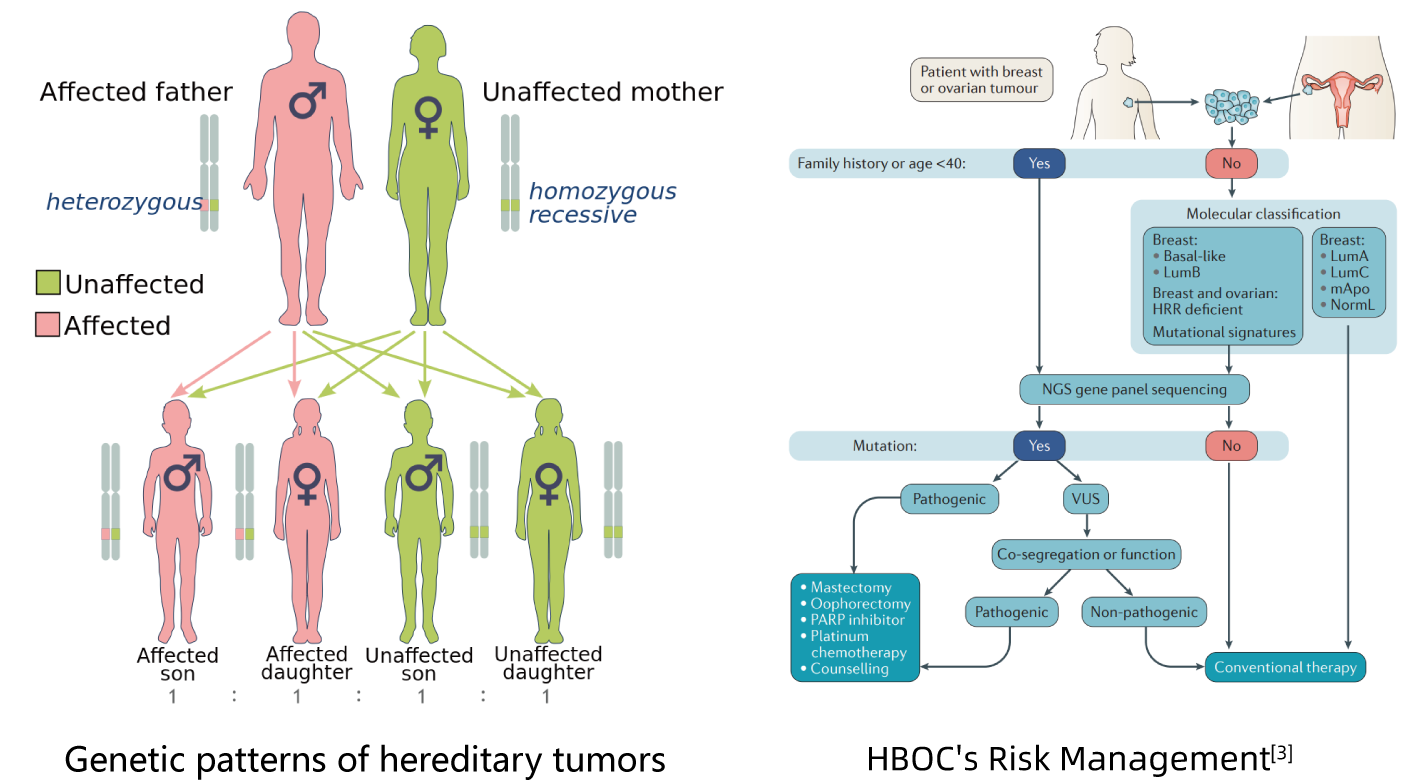
The most prevalent familial cancers include breast, ovarian, gastric, colorectal, thyroid, renal, and prostate cancers. For example, germline MMR gene mutations cause Lynch syndrome (associated with hereditary colorectal cancer, etc.), while HRR gene mutations are linked to hereditary breast and ovarian cancer syndrome (HBOC) and hereditary prostate cancer. Additionally, pancreatic, esophageal, gastrointestinal stromal, endometrial, urothelial, melanoma, and other cancers also have hereditary components.
[1] Global status report on cancer 2026
[2] Nature. 2014 Jan 16:505(7483):302-8.
[3] Nat Rev Cancer. 2016 Sep; 16(9): 599-612.
The panel covers 58 genes associated with 20 hereditary cancer types – 19 for females and 18 for males, as listed:

For Cancer Patients
1. Identify causative gene to guide targeted therapy;
2. Indicate prognosis and predict probability of additional cancers;
3. Provide informative genetic data for family members.
For Relatives or Healthy Individuals
1. Assess risk of hereditary cancer syndromes;
2. Identify high risk individuals for enhanced health management.

Comprehensive Coverage
Simultaneously interrogates 58 genes associated with 20 hereditary cancers, covering all common hereditary cancer syndromes.
Extensive Variant Detection
Covers the entire coding sequence (CDS) region of all genes, detecting single nucleotide variants (SNVs), copy number variants (CNVs), small insertions and deletions (Indels), and other mutation types
Stringent Quality Control
Strict quality criteria are enforced at multiple critical steps, including nucleic acid extraction, library preparation, and post sequencing data processing
Broad Compatibility
Fully compatible with both Illumina and BGI sequencing platforms
1.Nucleic Acid Extraction
2.Library Preparation
3.Sequencing
4.Auto-data Analysis
5.Report











 闽公网安备35021202000745