

 EN
EN


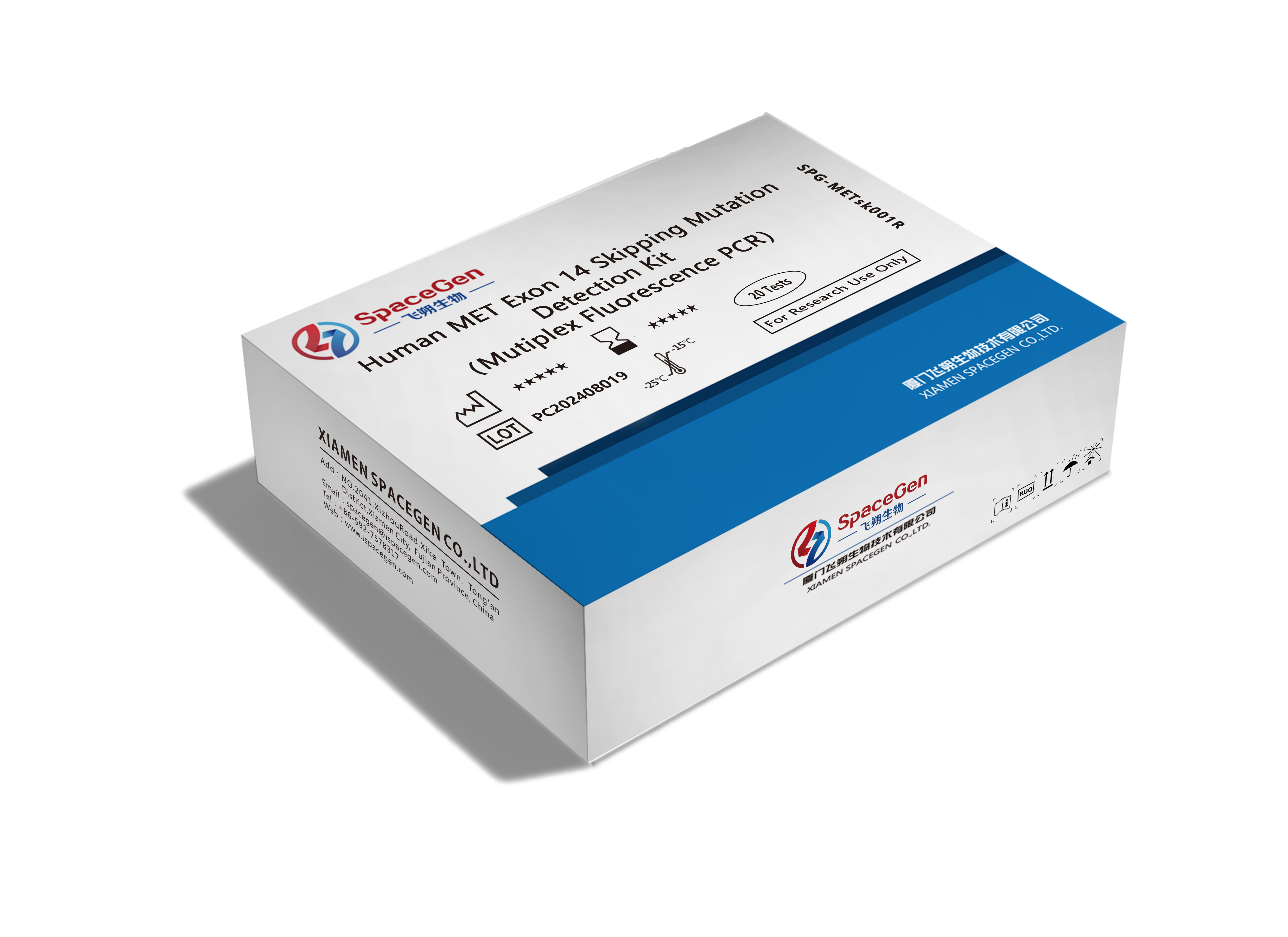

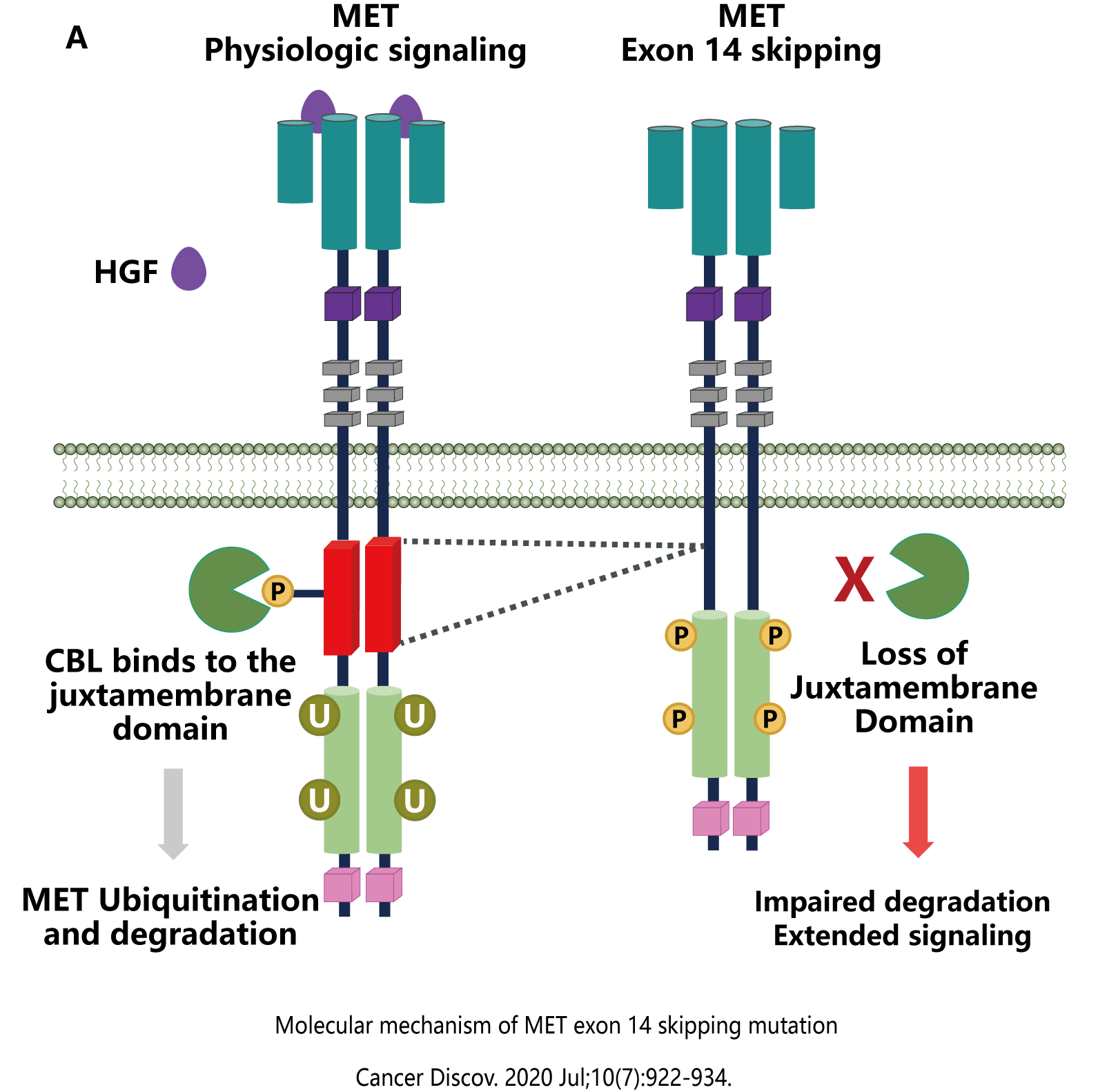
MET exon 14 skipping mutation refers to the loss of exon 14 in MET messenger RNA ( mRNA ) due to abnormal RNA splicing. The mechanism of action is that there are many mutations affecting the splicing donor and receptor sites at the splicing sites at the upstream and downstream ends of exon 14 of MET gene. These mutations may lead to abnormal splicing of MET mRNA, resulting in exon 14 being cut off along with the introns at both ends, resulting in exon 14 deletion. In turn, the ubiquitination and degradation function of c-MET protein is decreased, which causes the continuous activation of downstream signals and eventually leads to the occurrence and development of tumors.
Since 2020, FDA or NMPA has been approved for a variety of MET inhibitors, such as Crizotinib, Capmatinib, Tepotinib, Savolitinib, etc. Some drugs in clinical trials have also shown good efficacy, and the accessibility of MET inhibitors has gradually increased.
The detection methods of MET exon 14 skipping mutation mainly include RT-qPCR and NGS ( DNA or RNA ). RT-qPCR takes RNA as the detection object, and primers are designed in the exon 13 and exon 15 regions of MET to detect whether there are specific amplification products. This method has high accuracy in detecting MET exon 14 skipping mutation.
MET exon 14 skipping mutation detection was performed before systematic treatment of NSCLC inoperable patients, and the treatment was guided according to molecular typing.

Fast Detection
The detection process takes only 1 working day
Stable and Reliable
Closed tube testing is adopted to effectively avoid cross contamination
High Accuracy
To determine whether there is a deletion of MET exon 14 at the RNA level, this method has a high accuracy in detecting MET exon 14 skipping mutation.
Simple Operation
It is compatible with a variety of PCR platforms to facilitate the rapid development of the hospital and the laboratory.
1.Nucleic acid extraction
2.Set up qPCR
3.Amplification
4.Data analysis



 闽公网安备35021202000745